Overview
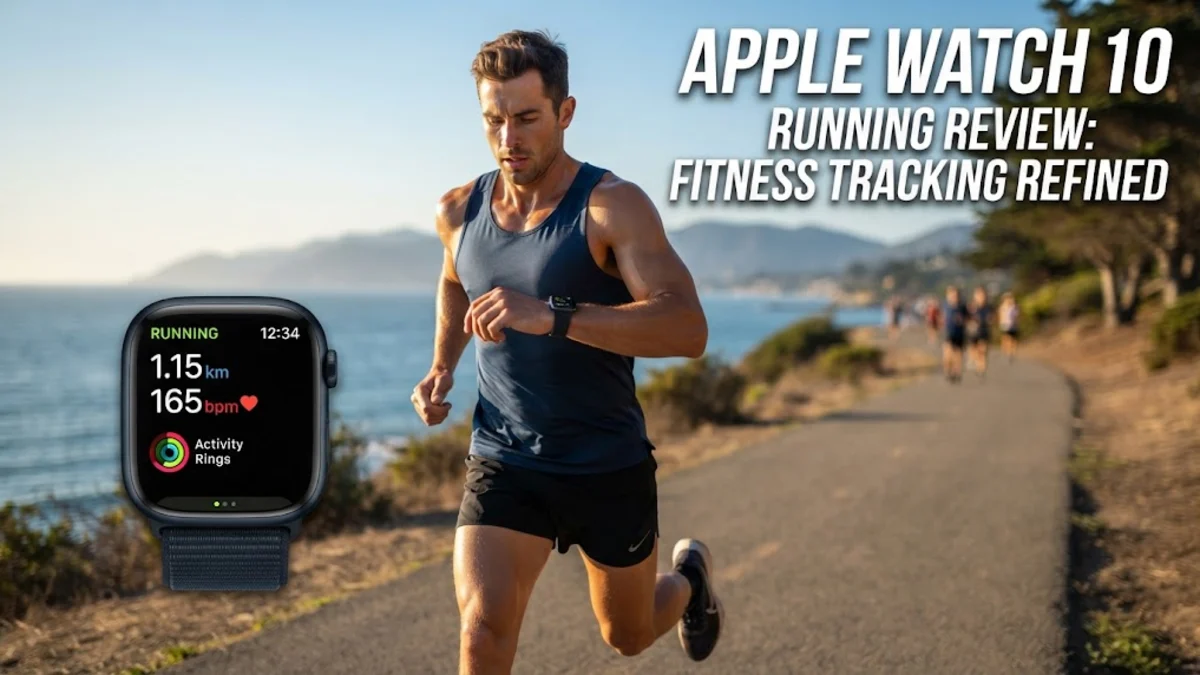
The Apple Watch 10 enters the market as the most refined iteration of Apple's flagship wearable, successfully blending sophisticated health monitoring with enhanced fitness tracking. For runners, the series has consistently improved its internal sensor suite, making it a highly viable companion for everything from casual 5K jogs to rigorous marathon training blocks. This review examines how the device functions as a dedicated running tool, focusing on its ability to track pace, heart rate, and GPS distance with the precision required by active users who also desire a smartwatch that integrates perfectly with their digital life.
Unlike traditional fitness watches that look purely utilitarian, the Apple Watch 10 aims to be an everyday piece of technology. It tracks your runs with high accuracy, but it also manages your calendar, responds to texts, and acts as a digital wallet. This multi-functionality is the primary reason many runners choose it over a dedicated sports watch. However, we must consider if these "smart" features come at the cost of the focus required for high-level athletic performance.
Design and Build
The Apple Watch 10 features a thin, lightweight chassis that makes it remarkably comfortable for long-distance runs. When you are several miles into a run, weight distribution matters, and the balanced profile of the 10 ensures that the watch does not bounce or dig into your wrist. The Always-On Retina display is notably brighter at wider viewing angles, which is a significant advantage when you are glancing at your wrist to check your pace or heart rate while moving in direct sunlight. You no longer need to perform the exaggerated "wrist flick" to see your data, as the screen remains visible even with a subtle tilt.
The build quality is another strong suit. The digital crown remains tactile and easy to use, even if you are wearing lightweight gloves or have sweaty fingers. The side button provides quick access to your last-used app, which is helpful for swapping between your workout screen and your music controller. The device is built with a scratch and crack-resistant front crystal, which provides necessary durability for outdoor sports where incidental contact with tree branches or gym equipment might occur. Compared to plastic-bodied trackers, the metal finish of the 10 offers a premium feel that transitions effortlessly from the road to the office.
Key Features and Performance
Running on the latest version of watchOS, the Apple Watch 10 delivers a highly responsive and fluid tracking experience. The built-in dual-frequency GPS is reliable, locking onto satellite signals in seconds, even in densely populated urban environments where buildings often create "urban canyons" that confuse lesser devices. The heart rate sensor is widely praised in both expert reviews and user forums for its high sampling rate, offering data that rivals traditional chest straps for steady-state aerobic efforts. Even during interval training where your heart rate spikes quickly, the sensor keeps pace with your effort.
New running-specific metrics in the workout app allow users to track cadence, stride length, and ground contact time. These metrics are vital for runners who are trying to optimize their form to prevent injury. The software now provides a training load feature, which quantifies the intensity of your runs over time. This helps you understand if you are overtraining or if you have enough recovery capacity for a hard session. Integration is another key pillar; the watch syncs data flawlessly with major platforms like Strava and Nike Run Club. For those who enjoy listening to music or podcasts on the go, the onboard storage and seamless Apple Music integration mean you can leave your phone at home entirely, provided you have a cellular plan or downloaded media.
Performance highlights include:
- Advanced running dynamics that provide deeper insight into your personal running efficiency and form.
- Enhanced sleep stage tracking which helps users understand how much restorative rest they are actually getting.
- Seamless syncing with third-party fitness platforms to keep your existing data history intact.
- A water resistance rating that is more than sufficient for post-run swimming, post-run showers, or running in heavy downpours.
- Advanced fall detection and emergency SOS features, providing peace of mind for runners who hit the trails alone.
However, the battery life remains the primary trade-off. While it supports fast charging—enabling you to get a 0 to 80 percent boost in roughly 30 minutes—you still need to be intentional about your charging schedule. If you track your sleep every night and run for an hour every morning, you must find a gap in your day to charge the device, or you risk it dying during an afternoon meeting or your next workout.
Who It Is For (and Who Should Skip It)
The Apple Watch 10 is ideal for the runner who wants a versatile daily driver. If you appreciate having your notifications, calendar alerts, Apple Pay, and offline music right on your wrist alongside your running data, the Apple Watch 10 is arguably the best choice on the market. It excels in the intersection of health, productivity, and fitness. It is perfect for professionals who want to track their fitness levels without needing to switch watches between the gym and the boardroom.
You should skip this model if you are a long-distance ultra-runner who spends 6+ hours at a time on trails. If you prioritize extreme battery life that lasts for a week without a charger, this is not the right tool for you. Furthermore, if you are a data purist who needs highly specific anaerobic training modules, blood lactate threshold testing, and mountain-specific navigation features, you will find that dedicated sports watches from brands like Garmin offer a more specialized toolset that the Apple Watch cannot currently match.
Alternatives Worth Considering
For those focused purely on training, the Garmin Forerunner 265 provides a more focused suite of recovery, training readiness, and battery efficiency metrics. Its AMOLED screen is beautiful, but the operating system is tuned specifically for athletics. The Coros Pace 3 is another excellent, budget-friendly alternative that offers incredible battery life, often lasting two weeks in standard use, making it a favorite for ultra-distance athletes who don't want to worry about charging. If you are already locked into the Samsung phone ecosystem, the Galaxy Watch 7 is a comparable experience that tracks health metrics well, though it lacks the broad app library that Apple offers.
Final Verdict
The Apple Watch 10 is a powerful, elegant, and highly capable fitness tracker that fits perfectly into an active lifestyle. It brings a level of polish and user-friendliness that most purely sport-focused watches lack, making it a genuine joy to use in daily life. While the battery limitations keep it from being the definitive tool for elite endurance athletes training for 100-mile races, it is more than sufficient for the vast majority of runners. For those seeking a blend of high-end smart features and reliable running metrics, the Apple Watch 10 is a superior investment that delivers value every single day.