Overview
Finding an espresso machine that balances compact size, approachable controls, and genuine café-quality extraction is a recurring challenge for home coffee enthusiasts. The Breville Bambino Plus targets this exact middle ground. Positioned above entry-level steam-boiler machines but below bulky prosumer setups, this ultra-compact espresso maker incorporates several premium features found in Breville's high-end lineup, most notably digital PID temperature control, low-pressure pre-infusion, and an automated microfoam milk steaming wand.
Analysis of expert reviewer benchmarks and long-term user feedback indicates that the Bambino Plus has established itself as a benchmark for small-footprint home brewing. Rather than relying on traditional brass or stainless steel boilers that take ten to fifteen minutes to reach operating temperature, the Bambino Plus utilizes proprietary ThermoJet technology to heat up in just three seconds. Additionally, its hands-free automatic milk texturing system solves one of the steepest learning curves for beginner baristas, automatically heating and frothing milk to silky microfoam suitable for latte art. In this review, we examine the machine's design, espresso performance, milk texturing capabilities, maintenance requirements, and overall value to help you decide if it belongs on your kitchen counter.
Design and Build
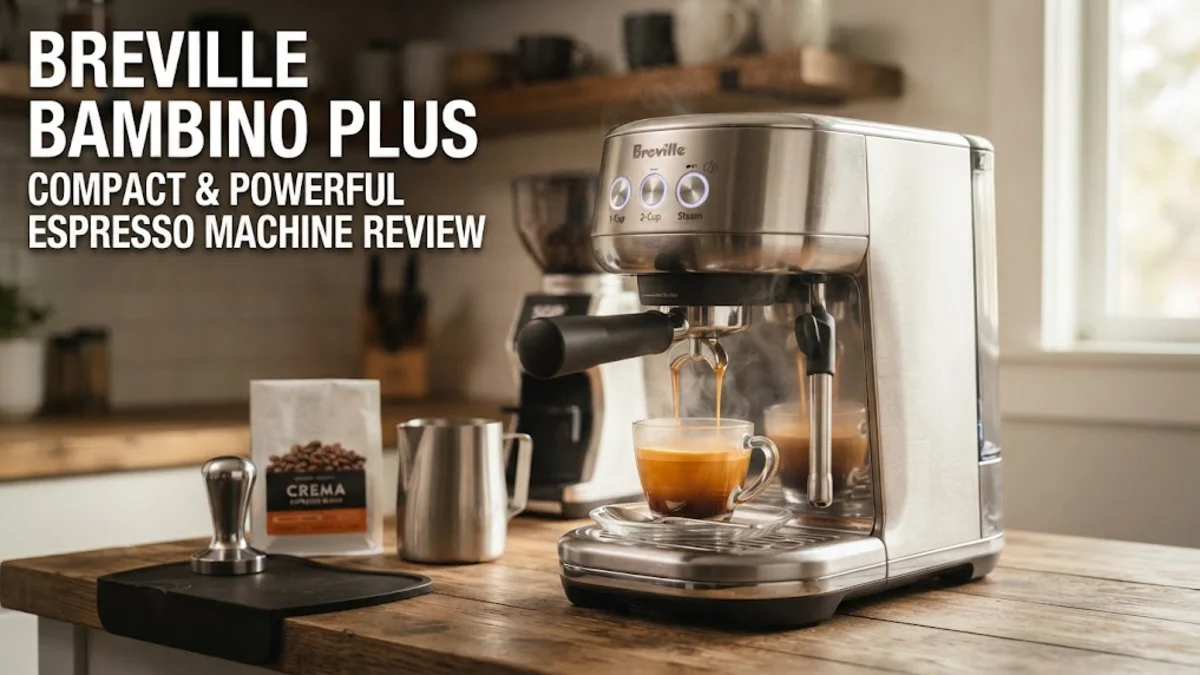
The first impression of the Breville Bambino Plus is its remarkably small footprint. Measuring just 7.7 inches wide, 12.6 inches deep, and 12.2 inches high, it fits comfortably into tight kitchen nooks and beneath low-hanging upper cabinets where traditional espresso machines cannot go. The chassis is wrapped in brushed stainless steel, giving it a clean, contemporary aesthetic that matches modern kitchen appliances. Despite its metal exterior, the internal structure and underlying chassis rely heavily on lightweight plastics, bringing the overall unit weight to approximately 10.9 pounds.
While the light weight keeps the unit nimble, it creates an operational quirk noted by almost all verified owners: locking the portafilter into the group head requires holding top or side of the machine with your free hand to prevent the entire unit from sliding across smooth granite or quartz countertops. The top plate features an array of tactile, backlit push buttons that control single and double shot volumes, steam activation, and three selectable levels each for milk temperature and froth thickness.
The water reservoir, located at the rear of the machine, holds 64 fluid ounces (1.9 liters) of water. It includes a built-in water filter holder and level markings visible from the side. While removing the tank for refilling is straightforward, placing it at the back means you will need adequate overhead or side clearance to lift it out daily. The drip tray is constructed from stainless steel trim over a plastic basin. It includes a mechanical floating red float indicator that pops up when water levels are high. However, because the machine performs automatic internal steam purges into the drip tray, the tray fills up quickly and requires frequent emptying.
The package includes a 54mm stainless steel portafilter, single-wall and dual-wall filter baskets for single and double shots, a stainless steel milk jug with built-in thermal sensor strip, a plastic tamper, and Breville's Razor precision dose trimming tool. While the included portafilter and plastic tamper are functional, enthusiast reviewers frequently recommend upgrading to a heavier stainless steel tamper and a bottomless portafilter down the line to maximize extraction feedback.
Key Features and Performance
Espresso extraction on the Bambino Plus relies on a 15-bar Italian pump calibrated with an over-pressure valve (OPV) to cap extraction pressure at 9 bars—the industry standard for balanced espresso. The extraction process begins with a true low-pressure pre-infusion, gently saturating ground coffee at lower pressure before ramping up to 9 bars. This process significantly reduces the risk of channeling, ensuring a more uniform flow through the coffee puck and yielding a richer crema with balanced acidity and sweetness.
Because the Bambino Plus does not include an integrated coffee grinder, shot quality depends heavily on your choice of pre-ground coffee or a standalone espresso burr grinder. For beginners using pre-ground supermarket coffee, the included dual-wall pressurized baskets compensate for uneven grind sizes by artificially creating backpressure to produce thick crema. For experienced users pairing the machine with a quality dedicated burr grinder, the single-wall unpressurized baskets allow full control over grind size, dose, and extraction time, producing shots that match larger commercial-style machines.
The automated milk texturing wand is undoubtedly the standout feature of the Bambino Plus. Equipped with a temperature sensor built into the drip tray directly beneath the milk pitcher, the machine monitors milk temperature in real time. You simply pour cold milk into the stainless steel jug, place it over the sensor on the drip tray with the wand submerged, select your preferred temperature (140°F, 150°F, or 170°F) and foam level (low microfoam, medium, or high foam), and press the steam button. The machine automatically injects air and textures the milk to the desired microfoam consistency before shutting off automatically.
Testing feedback from professional reviewers emphasizes that the resulting microfoam is surprisingly silky and consistent, making it fully capable of pouring latte art without manual wand manipulation. For traditionalists who prefer manual control, lifting the steam wand manually bypasses the automatic sensor, allowing full manual control over angle and aerating depth.
The ThermoJet heating system provides near-instantaneous heat-up, transitioning from cold to ready-to-brew status in three seconds. However, coffee experts point out an important practical consideration: while the internal heating element warms water instantly, cold metal components like the portafilter and filter basket require heat soak time to achieve thermal stability. Running a blank double shot through the portafilter prior to dosing grinds warms the group head and portafilter, preventing cold metal from stripping heat during extraction.
Who It Is For (and Who Should Skip It)
The Breville Bambino Plus is best suited for:
- Space-Conscious Espresso Lovers: Ideal for urban apartments, small kitchens, or dedicated coffee bars where counter space is limited.
- Beginners and Busy Professionals: Perfect for those who want quick morning espresso drinks without mastering manual milk frothing techniques or waiting fifteen minutes for a boiler to preheat.
- Home Baristas with Existing Grinders: Excellent for consumers who already own a high-quality standalone espresso grinder or plan to purchase one separately.
However, you should skip the Bambino Plus if:
- You Want an All-in-One Machine: If you prefer an integrated burr grinder, machines like the Breville Barista Express or Barista Touch offer built-in grinding at a higher price and larger footprint.
- You Demand Commercial-Standard Hardware: Experienced baristas who prefer industry-standard 58mm portafilters, heavier commercial group heads, and traditional manual steam valves should consider prosumer single-boiler options.
- You Make Back-to-Back Milk Drinks for Large Groups: The compact drip tray and small water reservoir require frequent refilling and draining when making three or four milk beverages sequentially.
Alternatives Worth Considering
When shopping in the mid-range compact espresso category, three primary alternatives present distinct trade-offs:
Breville Bambino (Base Model): The entry-level Bambino saves around $150 compared to the Plus model. It uses the same ThermoJet 3-second heater and 54mm portafilter system but replaces the automatic microfoam steam wand with a standard manual steam wand. It also features a smaller 47-ounce water tank and lacks selectable milk temperature settings. If you are confident in manual milk texturing, the base model offers identical espresso extraction performance at a lower price point.
De'Longhi Dedica Deluxe (EC685): The Dedica Deluxe offers an even narrower 6-inch width and lower price. It uses a standard thermoblock system that heats up in roughly 40 seconds. However, its stock Pannarello steam wand creates thicker, airier froth rather than silky microfoam, making latte art difficult without aftermarket modifications. Furthermore, its stock portafilter system relies heavily on pressurized baskets, making it less tailored for fine-tuning specialty coffee beans.
Gaggia Classic Pro: Operating at a similar price point to the Bambino Plus, the Gaggia Classic Pro is built with a heavy-duty stainless steel body, commercial 58mm brass portafilter, and three-way solenoid valve. It appeals to traditionalists who enjoy upgrading and modifying components over time. However, it requires 5 to 10 minutes to heat up, uses a manual steam wand with higher skill demand, and lacks digital PID temperature stability out of the box.
Final Verdict
The Breville Bambino Plus strikes a balance between automated convenience and manual craft. By pairing a 3-second preheat ThermoJet system and PID temperature control with hands-free microfoam milk steaming, Breville has eliminated the two biggest hurdles for home baristas: long preheat wait times and tricky milk texturing technique.
While its lightweight build requires holding the machine steady when inserting the portafilter and the small drip tray demands frequent emptying, these minor design trade-offs do not detract from its impressive espresso shot quality and microfoam production. If counter space is at a premium and you want café-level milk drinks without a steep learning curve, the Breville Bambino Plus is one of the best compact espresso machines available.