Overview
In the rapidly expanding market of wearable technology, the Fitbit Sense 2 carves out a specific niche: the dedicated health-first smartwatch. While many competitors aim to be an extension of your smartphone, putting email, social media, and third-party apps on your wrist, the Sense 2 is designed with a more singular focus on your physiology. It is an instrument designed to help you understand your body’s signals throughout the day and night.
By leveraging proprietary sensors that monitor heart rate variability, skin temperature, and electrodermal activity, the Sense 2 acts as a persistent wellness dashboard. It aims to provide actionable data that bridges the gap between sedentary desk work and active fitness goals. For the average user looking to quantify their recovery, sleep quality, and physiological reactions to external stressors, this watch presents a compelling balance of sophistication and simplicity.
Design and Build
The design philosophy of the Sense 2 leans heavily toward discreet comfort. Unlike some bulky sports watches that can feel intrusive when you are trying to sleep or wear long-sleeved work clothing, this model features a slim, rounded aluminum chassis. The watch face is curved to fit the natural contours of the human wrist, which helps it remain unobtrusive even during vigorous movement. The weight distribution is balanced remarkably well, making it easy to forget you are wearing it, which is the gold standard for devices that demand 24/7 wear to provide accurate data.
The AMOLED display is a notable highlight. It produces vibrant, high-contrast visuals that are easily readable even when you are outdoors in bright, direct sunlight. The touch interface is snappy, though the operating system focuses on fluidity rather than raw performance for complex tasks. The proprietary strap mechanism is secure, ensuring the sensors maintain consistent contact with your skin, which is vital for the accuracy of heart rate and electrodermal readings. Swapping bands is simple enough for users to switch between a silicone athletic band and a more formal leather or woven option.
Key Features and Performance
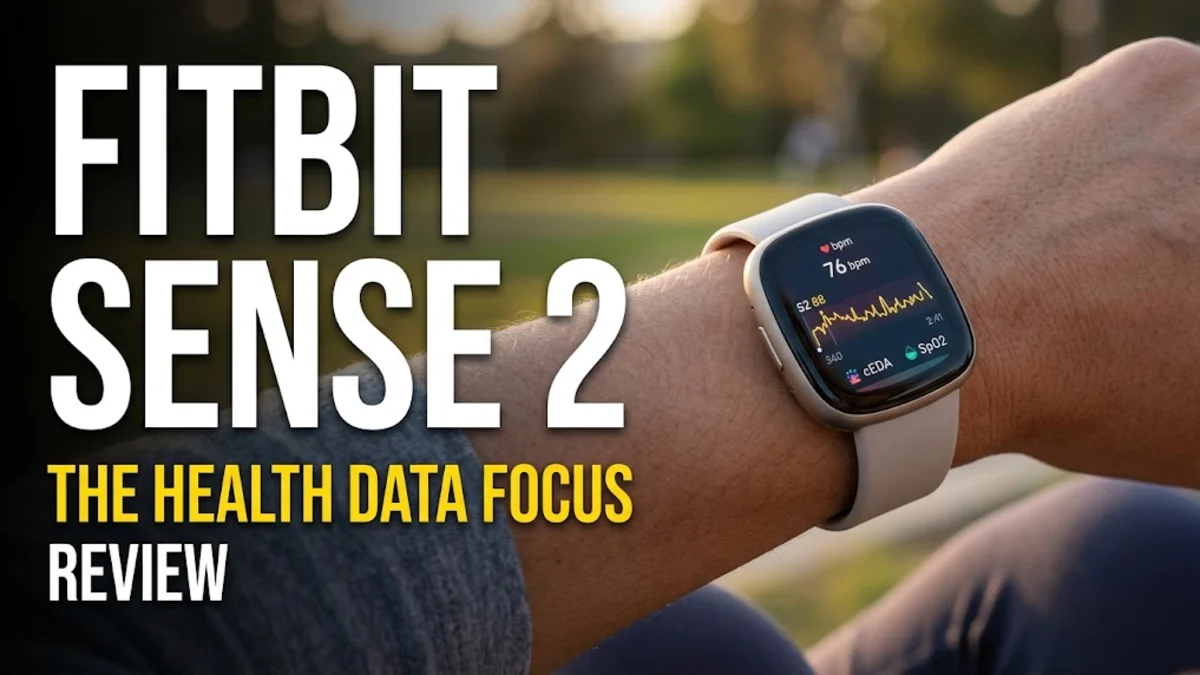
The standout innovation here is the CEDA (Continuous Electrodermal Activity) sensor. In practical terms, this allows the device to detect minute changes in your sweat gland activity, which is a physiological marker of your body’s stress response. If the watch detects a spike in these markers combined with rising heart rate, it prompts you to log your current mood or engage in a guided breathing session. This is not just a gimmick; it provides users with a way to correlate specific work situations or life events with their physical stress markers, enabling more informed decision-making regarding rest and recovery.
Fitness tracking is equally comprehensive for the target audience. The Sense 2 automatically recognizes several common activities like brisk walking, cycling, and running, logging the duration and heart rate zones without needing a manual start. The Sleep Score feature remains the industry benchmark, providing a detailed breakdown of light, deep, and REM sleep cycles. By combining this sleep data with heart rate variability trends, the watch offers a Daily Readiness Score that suggests whether you should tackle a high-intensity workout or prioritize rest. The built-in GPS functionality is accurate for outdoor runs, allowing you to track pace and distance without carrying your phone, although it can take a few extra seconds to lock onto a signal in dense urban areas.
Who It Is For (and Who Should Skip It)
This watch is explicitly designed for the wellness-focused consumer. If your primary goal is to improve sleep hygiene, monitor heart rate, or manage stress, the Sense 2 offers one of the best feature sets in its price category. It is an excellent upgrade for individuals currently using a basic fitness band who want more screen real estate, a better display, and more granular heart-rate tracking. It is also well-suited for people who prioritize long-term trends and data consistency over the constant connectivity of a full-fledged "miniature computer" on their wrist.
You should likely skip this model if you are a power user of the smartphone ecosystem. If you need to dictate replies to messages, manage complex third-party app workflows, store and stream music directly from your watch, or use professional-grade mapping tools for back-country trekking, you will likely feel constrained by the Sense 2. It does not support many of the third-party apps common on platforms like watchOS or Wear OS. If the ability to change your watch face to a fully interactive dashboard or use your watch to pay for transit in major cities via a broad range of native bank apps is essential, you will find the software environment on the Sense 2 too restrictive.
Alternatives Worth Considering
When looking at the market, the Apple Watch SE is the most direct rival for iPhone users. It offers a much deeper integration with the iOS ecosystem, including vastly superior third-party app support and more fluid notification management, though it suffers from significantly shorter battery life and lacks the same focus on specialized stress-monitoring sensors. For users who want an athletic focus with better battery life, the Garmin Venu 3 is a strong contender. It provides deeper sports metrics and more robust offline features, though it comes at a higher price point and with a steeper learning curve regarding the interface.
Final Verdict
The Fitbit Sense 2 succeeds as a dedicated health companion. It avoids the common pitfalls of cramming too many features into a small screen and instead optimizes for what matters most: comfort, battery life, and meaningful wellness insights. While the software platform could benefit from more third-party support and the subscription model for advanced metrics might be a deterrent for some, the core experience is highly consistent. If you are looking for a device that encourages a proactive approach to your daily health, this watch is one of the most balanced tools available in 2026.