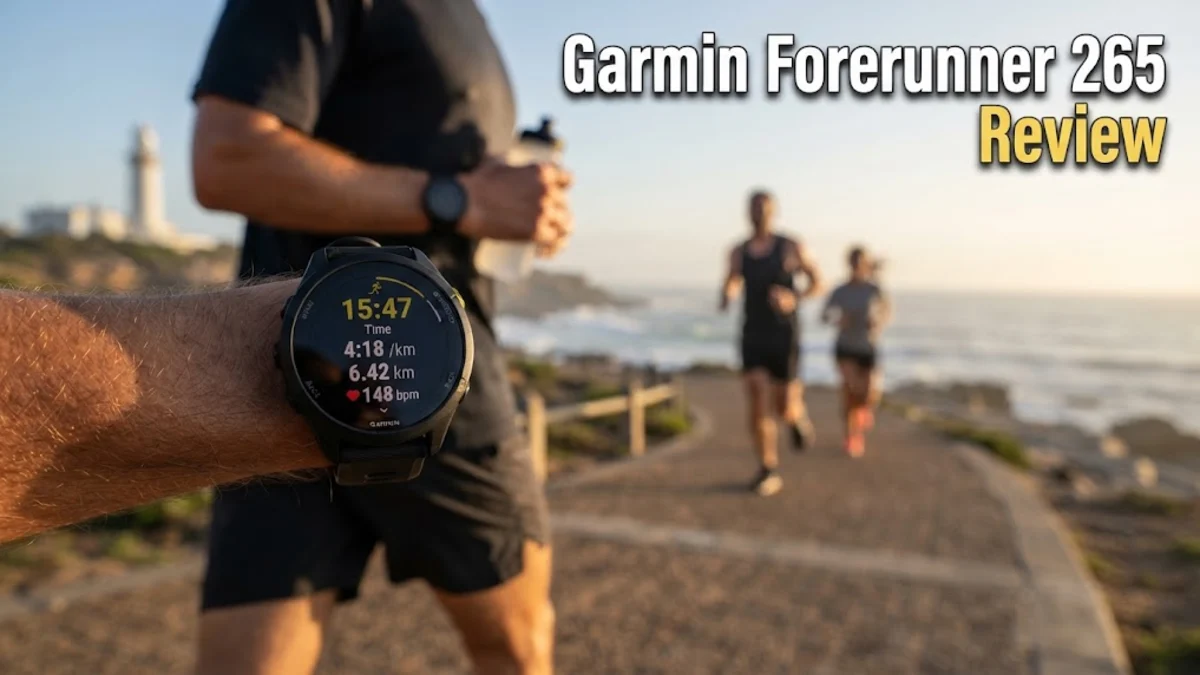
Overview
The Garmin Forerunner 265 arrives as a significant evolutionary step in Garmin's immensely popular mid-range running watch lineup. Designed primarily for runners, triathletes, and fitness enthusiasts who want detailed training metrics without stepping up to the top-tier Forerunner 965, this model bridges the gap between lifestyle smartwatches and hardcore training tools. Based on manufacturer specifications, professional expert analysis, and patterns in verified customer feedback, the Forerunner 265 brings a gorgeous screen upgrade to a trusted athletic platform. As fitness trackers and running watches continue to converge, evaluating whether this device meets your specific athletic goals requires a close look at its build, features, and everyday performance. When looking at the broader market, mid-range running watches face intense pressure from both budget-friendly competitors and feature-heavy lifestyle smartwatches. Garmin has positioned the Forerunner 265 to capture the attention of athletes who want modern display technology without sacrificing the deep physiological metrics that serious runners rely on for race preparation. Understanding how this watch performs in daily training, recovery tracking, and lifestyle integration helps clarify its value proposition for everyday users.
Design and Build
The most striking update on the Garmin Forerunner 265 is its bright, colorful AMOLED display. Replacing the traditional memory-in-pixel screen found on older iterations, this panel offers deep blacks and high saturation, making your data fields easily legible under direct sunlight as well as in pitch-black evening conditions. Coming in two distinct sizes to accommodate various wrist dimensions, the watch features a lightweight polymer case paired with a comfortable silicone band that stays secure during high-intensity sweat sessions. Physical buttons flank the sides, ensuring you can navigate menus and start workouts effortlessly even when your fingers are wet or you are wearing running gloves. The overall aesthetic is sporty yet understated enough for daily office wear. Unlike heavy metal smartwatches that can bounce annoyingly during a long sprint or tempo run, the featherlight construction of the Forerunner 265 ensures it virtually disappears on your wrist, minimizing chafing and distraction. The Gorilla Glass 3 lens provides adequate scratch resistance for road running, though rugged trail runners may want to exercise caution against sharp rock faces.
Key Features and Performance
Underneath the hood, the Garmin Forerunner 265 is packed with sensors and software designed to optimize your training load and recovery. It utilizes multi-band GNSS tracking, which expert reviewers and user reports confirm provides exceptional GPS accuracy even in dense urban canyons or heavily wooded trails where older single-frequency chips typically falter. Training readiness is a standout software feature, combining sleep quality, recovery time, acute load, and HRV status to give you a daily score telling you whether to push hard or take a rest day. Battery life remains impressive despite the power-hungry AMOLED screen, offering up to 13 days in smartwatch mode or around 20 hours of continuous GPS use. Smartwatch features include Garmin Pay contactless payments and smartphone notification mirroring, though it lacks cellular connectivity and onboard map routing. Furthermore, the Morning Report feature greets you each day with a customized summary of your sleep score, weather outlook, daily calendar, and HRV status, allowing you to mentally adjust your training plan before your feet even hit the floor. The addition of running dynamics directly from the wrist without requiring an external chest strap or running pod means you can easily monitor your cadence, stride length, and ground contact time with zero setup friction.
Who It Is For (and Who Should Skip It)
This watch is ideal for dedicated runners, half-marathon and marathon trainees, and data-driven athletes who want a gorgeous screen combined with professional-grade training insights. If you value recovery metrics, daily training suggestions, and long battery life without wanting to charge your device every single day, the Forerunner 265 hits the sweet spot. You should skip this watch if you are on a strict budget, as options like the Coros Pace 3 offer many core tracking features for significantly less money. Additionally, if you need full topographical color maps for trail navigation or deep standalone smart features like cellular voice calling, you might be better served by a dedicated adventure watch or a standard smartwatch. Cyclists and triathletes who require seamless power meter integration and multi-sport profile customization will also find plenty to love here, whereas casual gym-goers who only track occasional weightlifting sessions might find the running-centric metrics largely superfluous to their daily fitness routines.
Alternatives Worth Considering
When shopping for a new running watch, several competitors deserve your attention. The Coros Pace 3 is the primary budget-friendly alternative, offering stellar battery life and robust tracking metrics at nearly half the price, though it uses a simpler screen that lacks the rich contrast of AMOLED. The Polar Pacer Pro is another strong running-focused competitor known for exceptional training load calculations and a lightweight form factor, appealing heavily to runners who appreciate structured testing protocols. For those who prioritize everyday smartwatch convenience, lifestyle apps, and seamless phone integration over pure running metrics, the Apple Watch Series 9 or Samsung Galaxy Watch series remain popular alternatives, though their battery life pales in comparison to Garmin devices, often requiring daily charging sessions that disrupt continuous sleep and recovery tracking.
Final Verdict
The Garmin Forerunner 265 successfully elevates the mid-range running watch category by successfully integrating a stunning AMOLED screen with Garmin's industry-leading fitness ecosystem. While it commands a premium price and omits advanced topographical mapping, its accuracy, comprehensive recovery insights, and robust daily tracking make it a stellar investment for anyone serious about improving their running performance. Research into expert consensus and user feedback confirms it is one of the most reliable and motivating training companions available on the market today. It manages to balance visual flair with serious athletic utility, ensuring that whether you are chasing a personal best in a 10k or simply trying to establish consistent healthy habits, the hardware and software work in tandem to keep you informed, motivated, and safely on track toward your long-term fitness milestones.