Overview
Working long hours at a home office desk places immense strain on your spine, shoulders, and lower back. Standard task chairs often force your body into rigid postures, leading to muscle fatigue and stiffness over an eight-hour workday. The Haworth Fern Office Chair was engineered to address this exact challenge by rethinking how a chair back supports human movement. Developed in partnership with ITO Design, the Fern draws inspiration from nature, utilizing a biomimetic backrest system that flexes and adapts dynamically as you shift weight, reach across your desk, or recline during calls.
Rather than relying on a hard outer frame with stretched mesh, Haworth designed the Fern with an internal structural stem and flexible leaf-like polymer fronds. Synthesis of expert ergonomics evaluations and long-term owner reviews highlight its flexible back structure compared to traditional task chairs. It competes directly with flagship ergonomic chairs like the Herman Miller Embody and Steelcase Gesture, bringing a unique balance of plush seat cushioning and fluid, frameless back support to home office professionals, software developers, and digital creators.
Design and Build
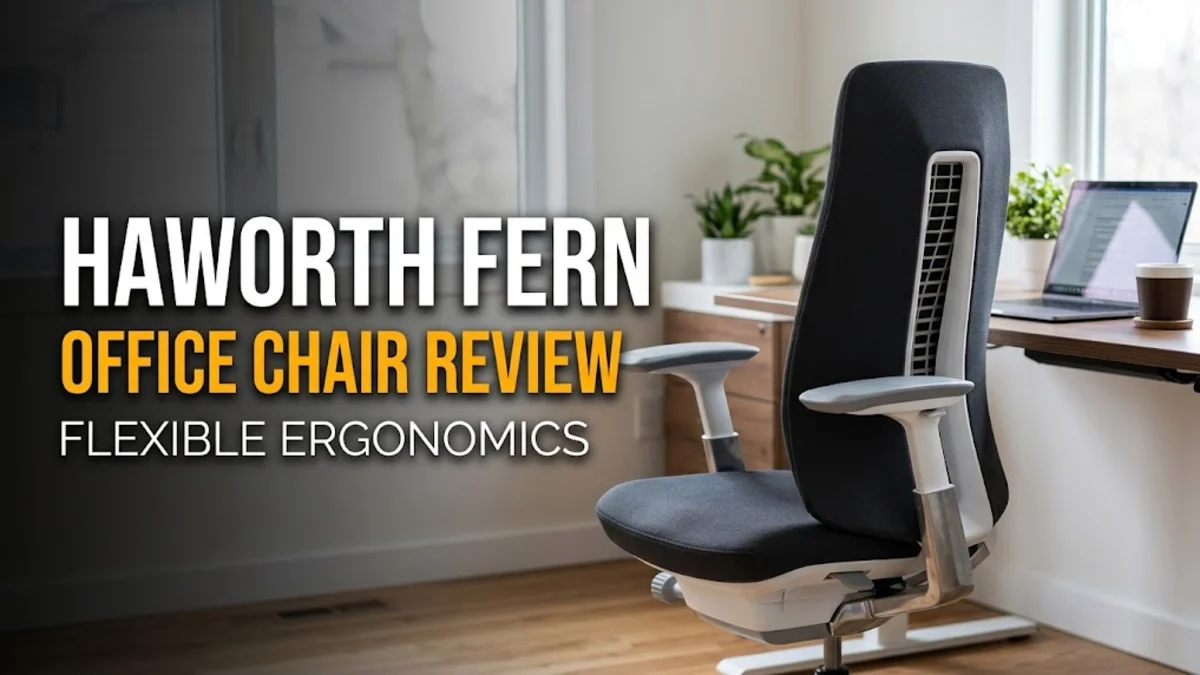
At first glance, the Haworth Fern stands out for its clean silhouette and absence of a hard perimeter frame around the backrest. The back structure consists of three integrated layers known as the Wave Suspension system: an inner structural spine (the stem), a network of flexible support elements (the fronds), and a breathable outer mesh or digital knit fabric layer. This construction eliminates hard pressure points along the top and sides of the backrest, allowing your shoulders and upper back to pivot freely without hitting hard plastic edges.
The overall build quality reflects Haworth commercial manufacturing standards. The base is available in durable reinforced glass-filled polymer or polished aluminum, supporting a heavy-duty pneumatic cylinder and smooth-rolling dual-wheel casters suitable for both carpeted floors and hard surfaces. The chair feels substantial and well-anchored, reassuring users that it is built for long-term daily service. Haworth backs the Fern with a 12-year commercial warranty rated for 24/7 multi-shift use up to 325 pounds, emphasizing its structural reliability for daily work-from-home tasks.
Key Features and Performance
Understanding how the Haworth Fern performs during grueling workdays requires looking closely at its core ergonomic features, from back flex mechanics to armrest positioning and seat pan adjustment.
Wave Suspension Backrest
The defining feature of the Fern is its Wave Suspension mechanism. As you twist, lean sideways, or recline, the internal fronds flex independently to maintain continuous contact with your back muscles. Expert reviews consistently highlight how this mechanism prevents thoracic spine stiffness by encouraging micro-movements throughout the day. Unlike rigid mesh chairs that lock you into a single fixed posture, the Fern moves naturally with your body, providing uninterrupted support whether you sit upright to type or lean back to review documents.
Lumbar Support Dynamics
The Fern is offered either with standard passive lumbar support provided by its flexible back structure or with an optional height-adjustable lumbar element. Verified owner feedback reveals a clear distinction between these choices. For many users, the standard back structure offers ample lower back support, flexing naturally to match the curvature of the lumbar spine. The optional lumbar pad adds a distinct, firm contact point for those who require aggressive lower back encouragement. However, some reviewers note that the optional lumbar bar can feel somewhat firm or overly pronounced if you prefer subtle, evenly distributed pressure.
4D Adjustable Armrests
Arm support is essential for preventing neck and shoulder fatigue during long typing sessions. The Fern features fully adjustable 4D armrests that modify for height, width, depth, and pivot angle. The adjustment controls operate smoothly with distinct tactile detents, allowing you to align the arm pads under your elbows to relieve upper body tension. The arm caps are topped with a resilient polyurethane material that offers soft-touch cushioning without feeling flimsy or showing premature wear.
Seat Cushion and Depth Adjustment
While several high-end ergonomic task chairs feature full mesh seats, the Haworth Fern utilizes a contoured, high-density foam seat cushion upholstered in durable fabric. This design provides balanced pressure distribution across the hips and sit bones. The front lip of the seat pan features a subtle waterfall contour, reducing pressure behind the knees and maintaining healthy leg circulation. Standard on the Fern is a seat depth slider offering 2.5 inches of travel, enabling users of varying heights to adjust the seat pan depth for ideal thigh support without crowding the back of their calves.
Recline Mechanism and Control Knobs
The Fern features a synchronized recline mechanism that opens your hip angle as you lean back, keeping your feet grounded while maintaining lumbar contact. It offers five recline stop positions alongside an intuitive side-mounted tension control knob to fine-tune resistance based on body weight. On fully optioned configurations, a forward-tilt feature enables the seat pan to angle slightly downward, ideal for active tasking or intense concentration periods when you lean forward toward your monitor.
Who It Is For (and Who Should Skip It)
The Haworth Fern is an ideal choice for remote professionals, software engineers, writers, and executives who spend six to ten hours at a desk daily and struggle with upper back tightness or lower lumbar stress. It is especially suited for individuals who dislike the hard outer frames found on traditional mesh chairs like the Herman Miller Aeron. Broad-shouldered or taller individuals will appreciate the wide, frame-free upper backrest that permits unimpeded shoulder blade movement.
Conversely, shoppers seeking a budget-friendly home office chair under five hundred dollars should look elsewhere, as the Fern represents a premium investment. Users who prefer deep, plush memory foam lounge seating may find the Fern ergonomic structure too supportive. Furthermore, if you require a chair with an easily retrofitted headrest, keep in mind that Haworth factory headrest option must be chosen at purchase and offers limited vertical articulation compared to third-party options on competitor models.
Alternatives Worth Considering
When evaluating premium ergonomic office chairs, three primary alternatives regularly compete against the Haworth Fern:
- Herman Miller Embody: Features a matrix of pixelated flex points across the seat and backrest for excellent spine tracking. It offers a slightly firmer sit and carries a higher price point than the Fern.
- Steelcase Gesture: Renowned for its industry-leading 360-degree articulating armrests that support mobile device and tablet postures, making it a strong option for varied tech setups.
- Herman Miller Aeron: The benchmark for full-mesh breathability and posture correction, though its rigid plastic perimeter frame restricts lateral shifting and alternate seating positions.
Final Verdict
The Haworth Fern Office Chair succeeds in pairing advanced ergonomic science with multi-hour seating comfort. Its biomimetic Wave Suspension system provides a responsive seating experience that cradles your back through every posture change without rigid frame interference. Supported by outstanding 4D armrests, a comfortable high-density foam seat cushion, and a commercial 12-year multi-shift warranty, the Fern represents a compelling long-term investment for anyone looking to optimize their home office health and everyday productivity.