Overview
In the expansive and often confusing market of portable power stations, the Jackery Explorer 1500 holds a unique position as a middle-ground titan. It is designed for users who need a significant jump in power capacity over entry-level units but who may not require the massive, wheeled industrial configurations meant for off-grid cabin living. With a capacity of 1534Wh, this unit sits comfortably in a sweet spot, capable of running a wide array of devices from basic household electronics to heavy-duty power tools and camping appliances. By synthesizing expert reviews and recurring themes from long-term owners, it is clear that this unit’s reputation is built on simplicity, reliability, and a conservative, safety-first engineering approach. Unlike newer models that often prioritize flashy features or experimental charging technology, the Explorer 1500 focuses on doing the basics exceptionally well.
Design and Build
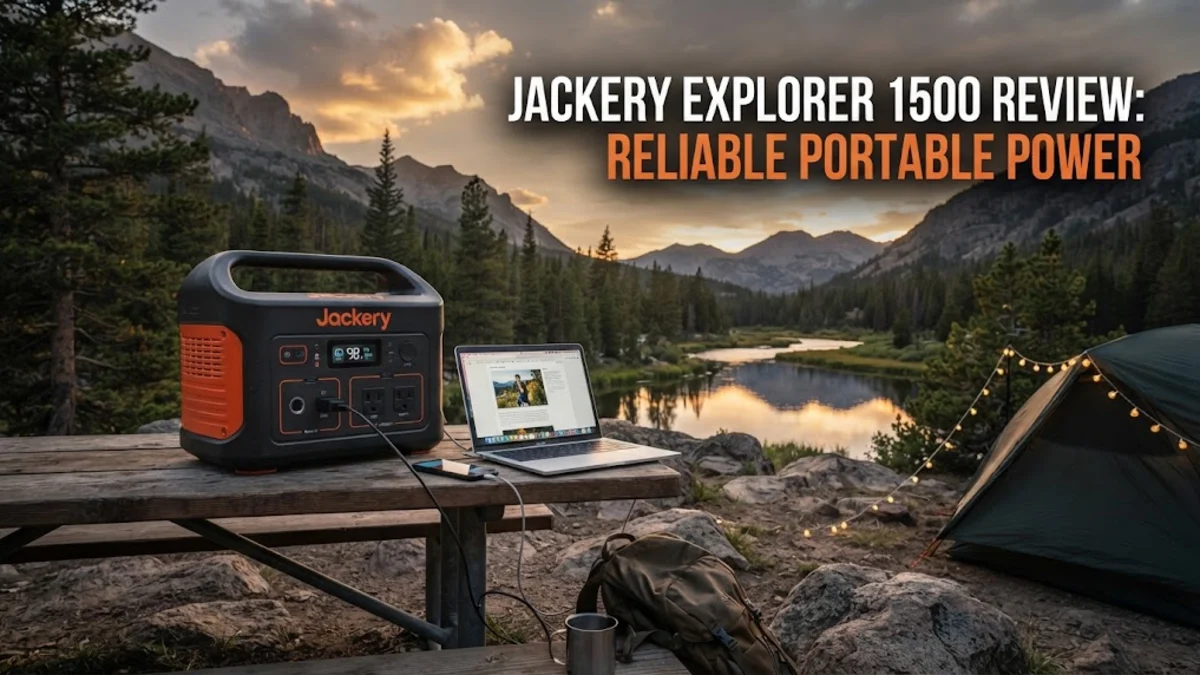
The design philosophy behind the Explorer 1500 is immediately recognizable. Sporting the brand's signature high-visibility orange and matte-black color scheme, the unit is intentionally built to be spotted in a dark garage or a cluttered campsite. The construction is centered around a durable, high-impact polycarbonate shell that effectively protects the internal battery cells from minor drops and typical travel vibrations. Weighing approximately 35 pounds, it is substantial enough to feel professional and well-made without being impossible for a single adult to move from a trunk to a picnic table.
The handle is integrated into the top chassis, ensuring it remains sturdy even after months of use. One of the most frequently praised design elements is the layout of the front panel. Unlike competitors who often clutter their interfaces with unnecessary digital menus or confusing sub-menus, the Explorer 1500 uses a straightforward physical button configuration. Each section of the output ports—AC, DC, and USB—is clearly labeled and independently controlled with a dedicated power button. This level of clarity significantly reduces user error during emergency situations when someone may be under stress and need to power up a device as quickly as possible.
Key Features and Performance
At its heart, the 1534Wh lithium-ion battery pack provides the backbone for the device's versatility. It delivers a pure sine wave AC output, which is a critical feature for anyone planning to power sensitive electronics. Unlike modified sine wave units that can cause buzzing, humming, or even hardware damage to laptops, smart medical devices, and high-end audio equipment, this unit provides a consistent electrical flow indistinguishable from standard wall power. The rated power output is 1800W, with a surge peak of 3600W, meaning it can easily handle the startup power requirement of devices like an electric grill or a full-sized coffee maker.
Charging the unit is designed to be as versatile as the output. It supports three distinct methods: solar, wall, and car charging. The unit is equipped with a high-quality MPPT charge controller, which is essential for solar users. MPPT, or Maximum Power Point Tracking, ensures that the station extracts the maximum possible wattage from your panels regardless of weather conditions or light intensity. For the average user, this means less time waiting for the unit to charge and more time enjoying the outdoors. The built-in LCD screen provides a real-time snapshot of the system's status. It clearly displays the input wattage (how fast it is charging) and output wattage (how fast it is draining), along with a reliable percentage-based battery indicator. This accuracy is a major plus for users who need to plan their energy consumption during multi-day outages.
Who It Is For (and Who Should Skip It)
This power station is an ideal match for car campers who want to maintain the comforts of home, such as running a mini-fridge, charging high-performance drones, or keeping tablets and laptops powered for entertainment. It is also a smart purchase for families living in areas prone to seasonal power outages. If you need to keep a CPAP machine running all night, a couple of lamps lit, and a phone charged during a blackout, this unit provides enough buffer to keep those essentials active without needing a gas generator, which is unsafe for indoor use.
Conversely, you should skip this model if your primary goal is finding the absolute bleeding edge of battery technology. Newer power stations using LiFePO4 chemistry offer significantly higher cycle counts—often upwards of 3,000 cycles compared to the 500-cycle estimate for this unit—and much faster charging times. If you intend to use this unit every single day of the year, or if you require rapid, hour-long recharging, you will likely find the recharge time and cycle limitation of this lithium-ion model to be a bottleneck. Similarly, if your power needs are extremely small, such as just keeping a phone topped up, this unit is likely more expensive and heavier than you need.
Alternatives Worth Considering
When you begin evaluating alternatives, the tradeoff is usually between the maturity of the technology and the innovation of the specs. The EcoFlow Delta 2 is a frequent comparison for good reason; it utilizes LiFePO4 chemistry and features significantly faster AC charging. However, some users find its software interface to be more complex. The Bluetti AC200P is another major contender, often offering a slightly larger capacity for a comparable price point, though it lacks some of the polish in the external finish. Finally, the Goal Zero Yeti 1500 is a competitor to watch if you are already invested in their ecosystem of expansion tanks and specialized solar accessories, though the price point is often higher for the ecosystem entry.
Final Verdict
The Jackery Explorer 1500 exists as a testament to the idea that you do not always need the latest, most complex hardware to solve a practical problem. It does not try to win a specs war, but instead delivers on the promises it makes: consistent output, extreme ease of use, and a robust chassis that handles the wear and tear of real-world use. It remains one of the most dependable portable power stations on the market, especially for users who value the stability of a product that has been thoroughly field-tested. While it faces stiff competition from faster-charging models in the current market, its balance of features ensures it will remain a cornerstone tool for campers and homeowners alike for years to come.