Overview
The Jackery Explorer 550 is a staple in the portable power market, designed to provide a balance between capacity and portability. When you are looking for a reliable source of power for your weekend camping trips or a backup plan for short power outages at home, this unit serves as a standard benchmark for ease of use. It focuses on providing a stable output for various devices, from small electronics like smartphones and tablets to larger appliances like mini-fridges or small fans.
Researching current feedback suggests that this model is favored for its rugged portability and the intuitive nature of its control panel. It avoids the complexity of some high-end smart power stations, making it an accessible option for those who are not particularly tech-savvy but need reliable power on demand. Unlike newer systems that require complex app setups to monitor battery health, the Explorer 550 lets you check your status instantly on its integrated screen.
The power station is built for those who value peace of mind without the need for constant maintenance. Because it uses a lithium-ion battery architecture, it remains lightweight enough to move easily from your garage to your campsite or your living room during an outage. While the industry is shifting toward more complex systems, the Explorer 550 thrives by sticking to the basics: providing clean, portable energy exactly when you need it.
Design and Build
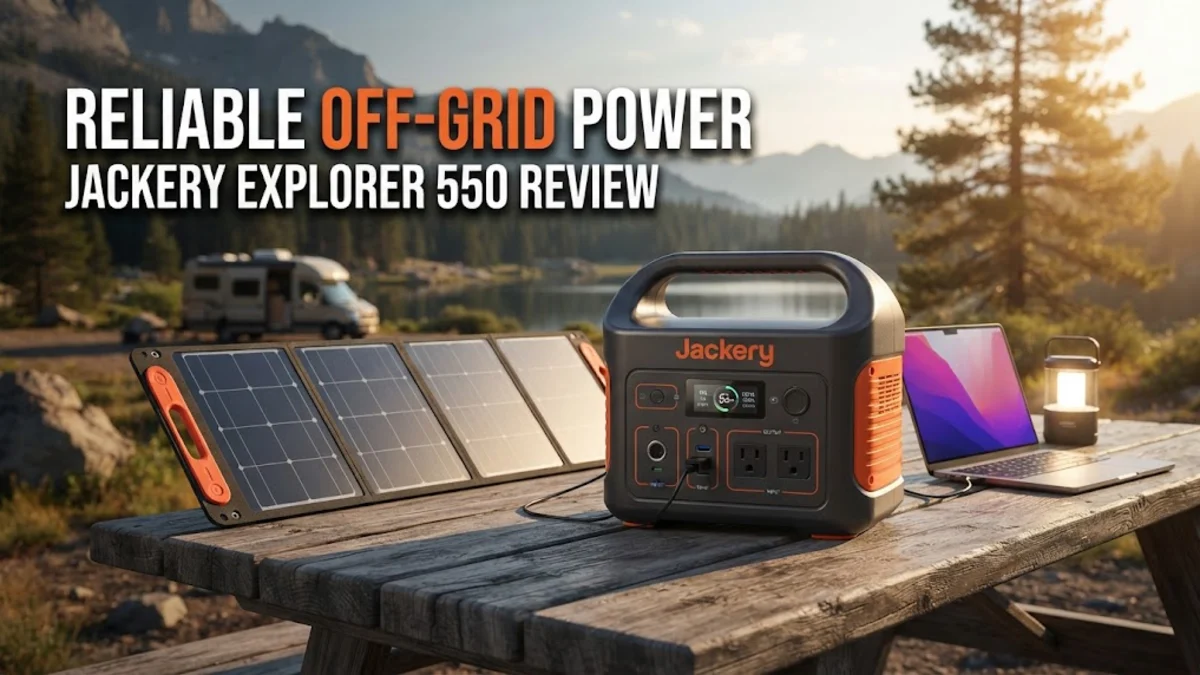
The Explorer 550 is built with a durable, high-quality plastic casing that is clearly aimed at outdoor use. Its signature orange and gray color scheme makes it easily visible in dim lighting, which is a practical consideration for camping environments where you might be packing up gear at twilight. Weighing approximately 13.8 pounds, it is manageable to carry using the sturdy integrated handle that folds down flat when not in use.
The build quality reflects a focus on durability in real-world conditions. Many verified buyers report that the unit survives the rigors of being jostled in the back of a truck or kept in a basement during storage. The front control panel is well-organized, grouping ports by type. You have access to a standard AC output, multiple USB-A ports, and a DC car port. Each section is clearly labeled, and the buttons have a tactile, positive click that ensures you know when an output has been activated or deactivated.
The integrated LCD screen is simple but informative. It displays real-time input and output wattage along with the remaining battery percentage in 20% increments. This level of detail is perfect for the average camper who just needs to know if their device is charging properly or how much runtime they have left for their reading light. The lack of excessive ports or complex settings means fewer failure points, which is a major advantage for long-term reliability.
Key Features and Performance
At its core, the Explorer 550 offers 550 watt-hours of capacity. In practical terms, this allows you to charge a standard smartphone roughly 50 times, power a laptop for about 8 to 10 hours of work, or keep a small electric cooler running for an entire day on a single charge. The pure sine wave inverter provides clean, stable power, which is critical for sensitive electronics like high-end cameras, drones, or medical devices like CPAP machines. Using an impure or modified sine wave inverter can often lead to buzzing or hardware damage, but the Explorer 550 mitigates this risk entirely.
In terms of performance, the unit is praised for its efficiency in maintaining a charge over long periods. If you store the unit correctly in a cool, dry place, you can rely on it to hold most of its capacity for months, making it a viable emergency backup tool. When it comes time to recharge, you have three primary methods: a traditional wall outlet, a 12V car charger, or compatible solar panels. While it does not support the rapid charging speeds of modern lithium iron phosphate (LiFePO4) models that can reach 80% in under an hour, the internal management system ensures that the charging process is consistent and safe, preventing overheating during long cycles.
The unit also handles surge power effectively. If you have an appliance that briefly draws more power during startup—such as a fan or a small tool—the Explorer 550 is designed to handle those brief spikes within its rated limits. This reliability is why many users who might otherwise consider a noisy, gas-powered generator opt for the silence and clean operation of this battery-based alternative instead.
Who It Is For (and Who Should Skip It)
The Jackery Explorer 550 is an ideal companion for weekend campers who need to keep their cameras, phones, and small LED lanterns powered throughout the trip. If you are a light camper who stays at a site where you want a bit of luxury—like a phone that stays charged or a fan for a hot tent—this provides the perfect utility. It is also excellent for homeowners who want a low-maintenance, plug-and-play solution for unexpected minor power interruptions, such as keeping a home router, a desk lamp, or a tablet running through a three-hour thunderstorm.
However, you should skip this model if your primary use case involves high-wattage equipment. If you are planning to run a coffee maker, an electric toaster, or a space heater, the 500W output limitation will cause the unit to shut down to protect its internal circuitry. Similarly, if you are an "off-grid enthusiast" who needs to power an entire cabin for a week, you should look for a larger capacity station. Finally, users who are hyper-focused on long-term cycle life (the number of times you can charge the battery before it loses significant capacity) might find the traditional lithium-ion chemistry less appealing than the modern LiFePO4 cells found in newer, more expensive competitors.
Alternatives Worth Considering
When shopping for portable power, it is helpful to compare the Explorer 550 against other options. If you prioritize faster charging and modern cell chemistry, the EcoFlow River 2 Pro is a strong contender that brings significantly faster input speeds and a longer lifespan. If you are focused on overall durability and specific outdoor features, the Bluetti EB55 offers a slightly higher power output and a different set of ports that might be more compatible with your existing equipment. While the Jackery is often preferred for its brand ubiquity and simple interface, these competitors are pushing the envelope in terms of feature-per-dollar ratios.
Final Verdict
The Jackery Explorer 550 continues to hold its ground due to its consistency and brand reputation. While the market has moved toward faster charging and longer battery lifespans, the Explorer 550 remains a highly effective, user-friendly tool for the average user. It provides enough power for most essential needs and avoids the technical headaches that can come with more complex systems. If your primary goal is simplicity, brand reliability, and a unit that will work exactly as described for years to come, it remains a smart investment for your household or adventure kit.