Overview
The Anker Soundcore 2 stands as one of the most recognizable fixtures in the budget portable audio market. Released years ago but still widely available and purchased in 2026, it represents a specific era of audio engineering where simplicity and battery longevity took precedence over smart features and high-speed connectivity. Measuring roughly 6.5 inches in length, this rectangular speaker is designed to be tucked away in a backpack, suitcase, or purse, making it a ubiquitous companion for commuters and travelers alike.
Unlike many modern speakers that emphasize flashy RGB lighting or complex app connectivity, the Soundcore 2 focuses on delivering consistent audio performance in a durable package. It is essentially a workhorse device. Whether you are using it in a college dormitory, a small office, or at a campsite, its primary value proposition remains unchanged: it works, it lasts for a remarkably long time on a single charge, and it is inexpensive enough to replace if lost during an outdoor excursion. In the current landscape of high-tech audio gear, the Soundcore 2 serves as a reminder that fundamental performance often trumps marketing buzzwords.
Design and Build
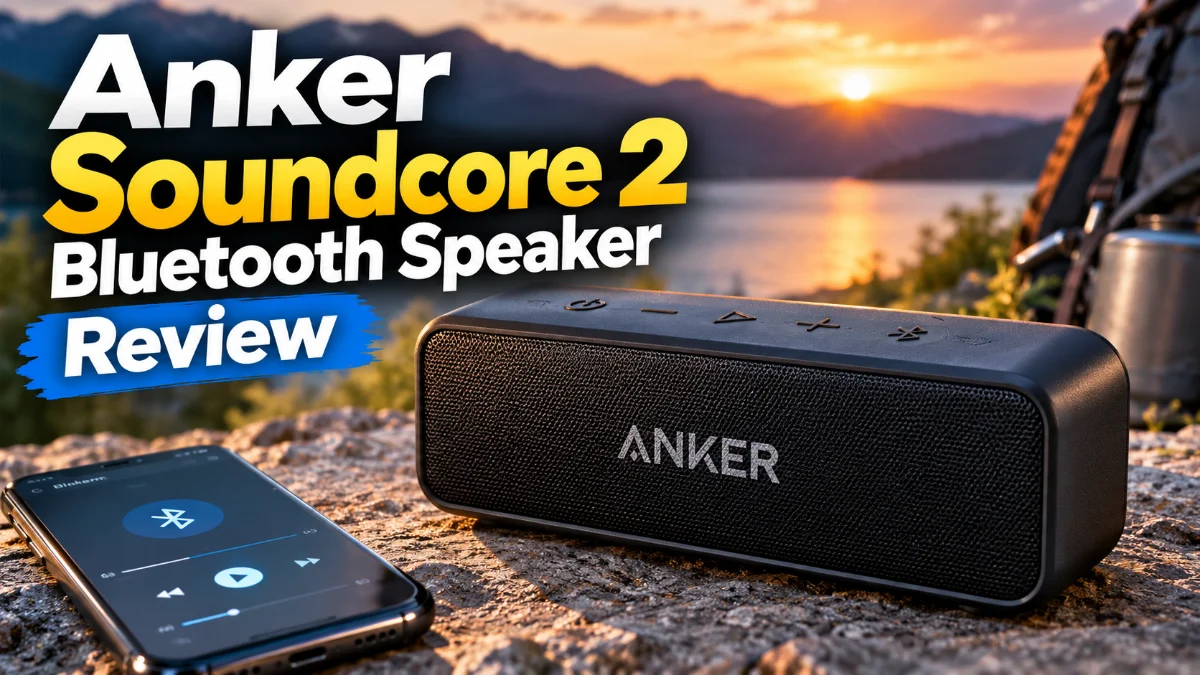
The aesthetic of the Anker Soundcore 2 is undeniably functional. It features a matte, rubberized finish that wraps around the entire chassis. This material serves two purposes: it provides a tactile, non-slip grip when handling the speaker with wet or dirty hands, and it offers a degree of impact resistance that helps the device survive accidental drops on hard surfaces. The grill on the front is metal, providing a sturdy barrier for the drivers behind it, and it feels remarkably solid for a product at this price point.
One of the most praised aspects of its design is the IPX7 waterproof rating. This certification is critical for outdoor-focused users. It technically permits the device to be submerged in up to one meter of water for thirty minutes. While we do not recommend using this speaker underwater as a practice, the rating provides peace of mind when using the device near swimming pools, kitchen sinks, or in unpredictable weather while hiking. It is effectively sealed against dust and debris as well, making it a low-maintenance option for those who do not want to baby their tech.
The physical buttons on the top are rubberized, tactile, and clearly labeled. They provide physical feedback that is superior to the capacitive, flat touch surfaces found on many newer speakers that can be finicky in wet conditions. The port layout on the side is tucked behind a protective rubber flap, ensuring that the charging input and the 3.5mm auxiliary jack remain protected from dirt and water ingress when not in use.
Key Features and Performance
At the heart of the Soundcore 2 are two 6W drivers and a passive bass radiator. This combination allows the device to produce a sound profile that is distinctly louder than its size would suggest. Anker utilizes their proprietary BassUp technology, which processes the digital signal to enhance low-end frequencies. In practical terms, this results in a punchy, energetic sound that works particularly well for modern music, podcasts, and video soundtracks. While the bass does not reach the deep, sub-bass levels required for bass-heavy electronic tracks, it is more than sufficient for the average listener who wants a bit more body than a smartphone or laptop speaker can offer.
The battery performance remains the headline feature. Rated for up to 24 hours of playback, the Soundcore 2 frequently exceeds expectations in real-world use. When testing at moderate volumes, most users will find they only need to charge the device once a week, even with daily usage. This reliability makes it a top-tier choice for camping trips where access to power outlets is limited. The Bluetooth 5.0 connection is stable, generally maintaining a strong link within the advertised 66-foot range, though performance may degrade if there are significant physical obstructions like walls or metal structures between the source device and the speaker.
We must address the connectivity limitations. In 2026, the reliance on a micro-USB port is the device's most significant drawback. Most modern households have transitioned to USB-C for every piece of hardware from tablets to phones. Keeping a specific micro-USB cable handy just for this speaker can be a point of frustration for users who value cable management and convenience. However, if you are a user who mostly keeps their charging cables in a dedicated "tech pouch" or drawer, this may be a minor inconvenience rather than a dealbreaker.
Who It Is For (and Who Should Skip It)
The Soundcore 2 is perfectly tailored for students who need an affordable desk speaker, travelers who want a reliable device that won't take up space, and outdoor enthusiasts who need a rugged speaker that can handle the occasional splash or drop. It is also an excellent "secondary" speaker for someone who has a high-end home sound system but needs something portable for the garage, the backyard, or a bathroom.
Conversely, you should skip this model if your primary use case involves high-fidelity critical listening. This is a budget device and should be treated as such; it does not offer the wide soundstage or the frequency response range of speakers costing three or four times as much. If you are deeply integrated into an ecosystem that requires voice assistant support, app-based EQ customization, or multi-speaker synchronization through modern software, the Soundcore 2 will feel archaic and limited.
Alternatives Worth Considering
Comparing the Soundcore 2 to newer models like the JBL Go 4 highlights the rapid pace of audio evolution. The JBL Go 4 offers a more modern design, a slightly better frequency response, and the crucial upgrade to USB-C charging, though it sacrifices a significant amount of battery life compared to the Anker. The Sony SRS-XB100 is another sophisticated alternative, featuring a cylindrical design that disperses sound in a omnidirectional pattern, which can be preferable for shared table settings. The Tribit XSound Go is the closest direct competitor, frequently trading blows with the Soundcore 2 in terms of sound clarity and durability. If you prefer a warmer, slightly more mid-range focused sound, the Tribit is often cited by enthusiasts as a preferred choice, while the Anker remains the king of raw battery endurance.
Final Verdict
After years on the market, the Anker Soundcore 2 has earned its status as a legend of the budget audio category. It is rare to find a product that manages to remain relevant without updates for this long. Its success lies in the fact that it nails the fundamental requirements of a portable speaker: it is durable, it gets loud without significant distortion, and it lasts for an incredibly long time on a single charge. While the micro-USB charging port is a clear indicator of its age and the lack of high-end features might alienate power users, these are acceptable trade-offs for the price. If you want a speaker that just works, requires minimal maintenance, and fits into almost any budget, the Soundcore 2 remains a safe, sensible, and highly recommended purchase in 2026.