Overview
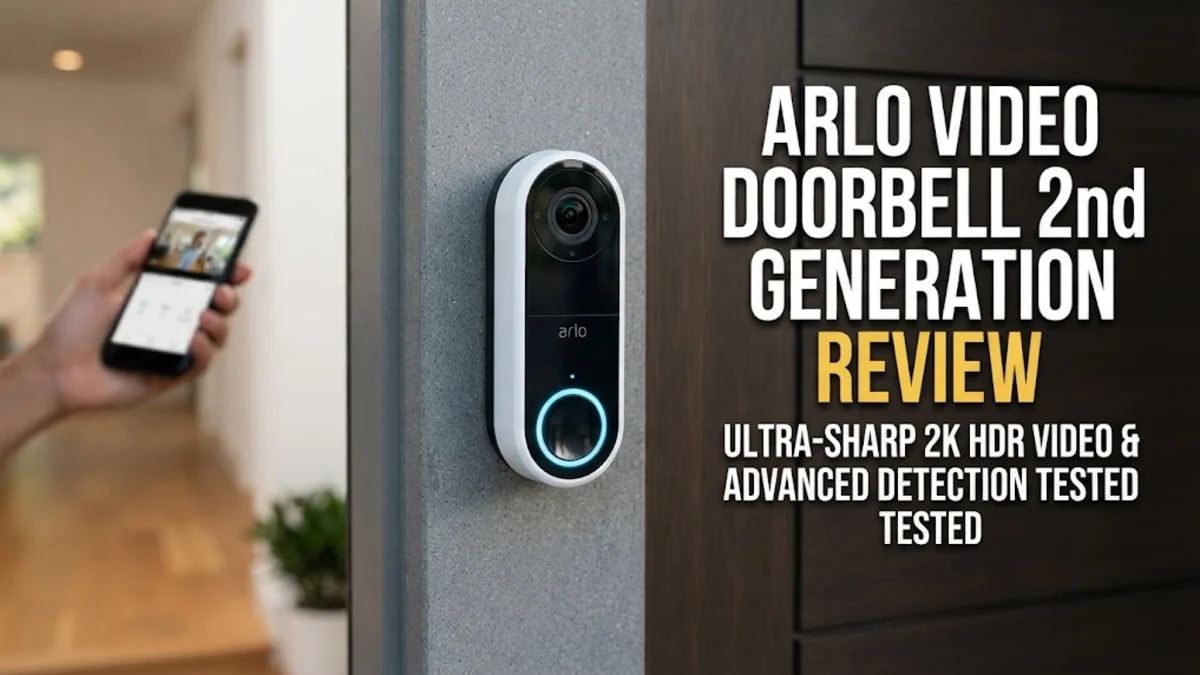
The Arlo Video Doorbell 2nd Generation occupies a specific niche in the smart home ecosystem, targeting users who want high-performance security without the bulk of larger, camera-heavy units. As a refreshed take on their popular doorbell line, this model prioritizes a refined hardware design that aims to blend seamlessly into the exterior of modern homes. In 2026, the expectations for a front-door camera are higher than ever: users demand not just a video feed, but intelligent detection, crisp resolution, and a platform that integrates smoothly with other smart home components. Arlo has addressed these needs by creating a device that focuses on vertical visual coverage—a massive advantage for those needing to see package deliveries on the porch floor—while keeping the user interface intuitive enough for non-technical family members.
Design and Build
When you handle the Arlo Video Doorbell 2nd Generation, the build quality stands out. It features a streamlined, vertical aesthetic that feels sophisticated rather than industrial. The exterior is weather-resistant, engineered to endure the erratic climate swings found in various regions across the United States, UK, and Australia. Whether facing heavy rainfall, snow, or direct scorching sunlight, the chassis maintains its integrity, ensuring the camera lens remains clear and the internal circuitry protected. The device is notably slim, which is a major design win; many older or competing models are quite bulky, making them difficult to mount on narrow door frames or complex siding. The button response is tactile and well-lit, providing guests with immediate feedback when they arrive at your door. Inside the box, you will find the necessary hardware for a standard wired installation, though it is important to confirm your home is equipped with a compatible doorbell transformer before beginning the process. The physical setup is designed to be accessible, but it is always recommended to verify that your transformer output matches the specific voltage requirements listed in the technical manual to prevent connectivity drops.
Key Features and Performance
The core of the Arlo experience is the imaging system. The camera utilizes a high-definition sensor that outputs a crisp, clear stream, allowing you to identify facial features with much greater confidence than legacy video doorbells. The 180-degree diagonal field of view is arguably its best feature. Traditional doorbells often have a letterbox-style view that cuts off the bottom of the frame, but Arlo's vertical focus ensures that even if a courier leaves a package directly underneath the unit, you will be able to see it. Motion detection is the second pillar of its performance. Through the Arlo application, you can set precise activity zones. This is critical for homeowners who live near sidewalks or busy streets; by excluding those public areas from the camera's monitoring range, you significantly reduce the amount of false positive alerts caused by passing cars or pedestrians. Night vision is another area of strength, using powerful infrared LEDs to illuminate your porch after dark. The images generated are high-contrast and easy to parse. However, the performance is heavily tied to the Arlo Secure cloud ecosystem. Advanced features such as person detection, package detection, and animal identification are processed in the cloud rather than locally on the device itself. This means that if you choose not to subscribe to the monthly plan, you are effectively turning the device into a basic streaming doorbell with limited notification intelligence. This trade-off is central to the Arlo value proposition, and buyers must weigh the premium performance against the ongoing recurring cost of the subscription.
Who It Is For (and Who Should Skip It)
This doorbell is ideal for homeowners who are already integrated into the Arlo security ecosystem. If you already own other Arlo cameras or sensors, adding this doorbell creates a unified dashboard where you can manage your entire property security from a single application. It is also well-suited for urban apartment dwellers who need a slim profile for limited mounting space and want high-resolution visual evidence of packages or visitors. If you prefer a platform that is extremely polished, receives frequent firmware updates, and provides a very high level of software-based AI assistance for identifying potential threats, this is an excellent pick. Conversely, you should skip this model if your primary requirement is a completely private, localized, no-fee experience. If you are a privacy-first user who refuses to let video clips reside in the cloud, the Arlo Video Doorbell 2nd Generation will leave you frustrated, as it lacks the robust local storage options found in some competing models that allow you to record directly to a NAS or an internal microSD card without external dependency. Similarly, if your home's existing transformer is dated or insufficient and you are not interested in performing electrical upgrades, the persistent connectivity issues might make this a poor fit for your specific infrastructure.
Alternatives Worth Considering
When considering the landscape of video doorbells, the competitive field is broad. Eufy doorbells are frequently cited as the primary alternative for users who want to avoid monthly cloud fees; they offer sophisticated hardware with internal storage, allowing you to manage your footage entirely on your own terms. For those entrenched in the Google ecosystem, the Nest Doorbell offers seamless integration with smart speakers and displays, frequently surfacing camera feeds automatically when someone rings the bell. Ring is another giant in this space, offering a massive community-led security network and a vast catalog of compatible accessories, such as floodlights and contact sensors. Each of these competitors offers a slightly different take on the 'smart doorbell' concept. The Arlo differentiator remains its focus on superior optics and a refined vertical field of view, which provides a distinct visual perspective that many competitors struggle to match. If your priority is the best possible image quality and field of view, Arlo often edges out the competition, but if your priority is cost savings or ecosystem lock-in, you may find the others more appealing.
Final Verdict
The Arlo Video Doorbell 2nd Generation represents a high-performing, well-designed security device that succeeds in providing excellent visibility at your front entrance. It captures high-quality video, manages complex light levels with ease, and offers useful alert customization to ensure you only get notified about what matters. While the dependency on an Arlo Secure subscription to unlock the full potential of its AI detection and historical recording is a notable drawback for budget-conscious consumers, the performance itself is difficult to fault. For users who prioritize camera hardware quality, build durability, and a highly polished user experience over a subscription-free environment, this remains a top-tier choice for your home in 2026. It turns the often-tedious chore of managing porch security into a smooth, app-controlled experience that fits into a busy modern lifestyle.