Overview
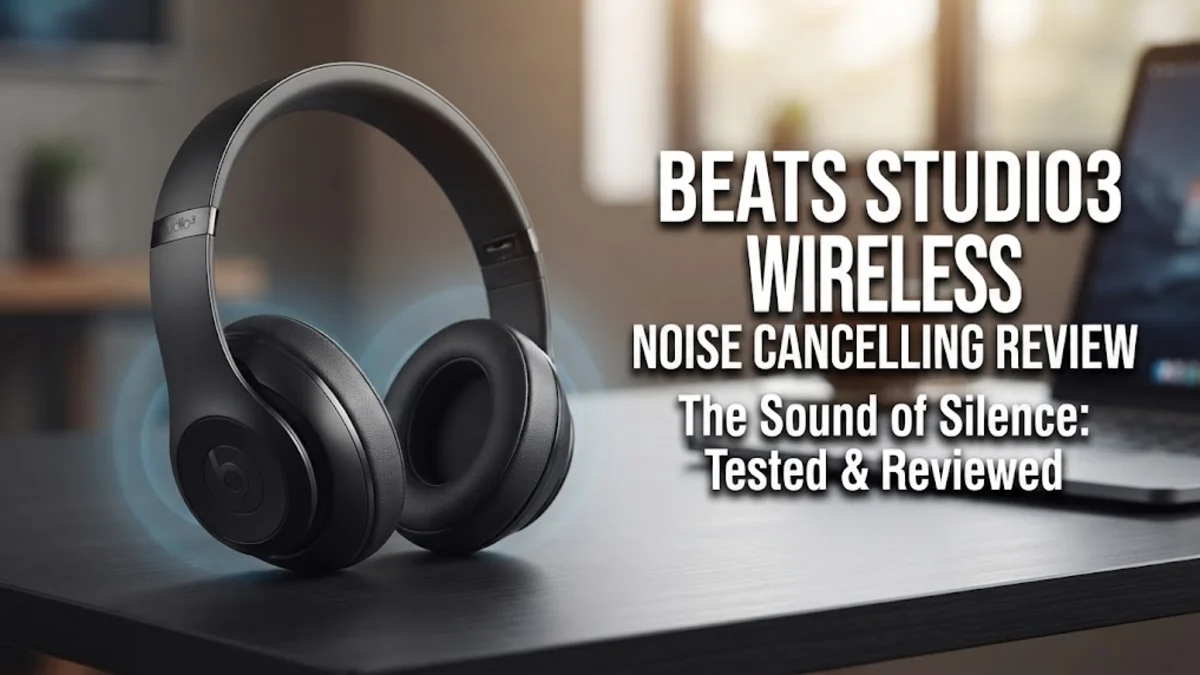
The Beats Studio3 Wireless remains a landmark product in the personal audio landscape, serving as a bridge between high-fashion accessory and functional technology. Since its inception, the Studio line has prioritized a specific aesthetic—a bold, recognizable silhouette—paired with an audio profile that emphasizes the low end. In the context of 2026, these headphones represent a legacy design that continues to serve a specific demographic: users embedded in the Apple ecosystem who prioritize ease of use and instant connectivity over the pursuit of neutral, studio-grade sonic accuracy. By leaning into the W1 chip technology, Beats created a seamless pairing experience that, even years later, remains intuitive for anyone frequently switching between an iPhone, an iPad, or a MacBook. While technical benchmarks for noise cancellation and battery efficiency have advanced rapidly across the industry, the Studio3 persists as a reliable daily driver for casual listeners who demand a consistent, low-friction experience.
Design and Build
The build of the Beats Studio3 is perhaps its most polarizing yet effective feature. Unlike the boxier, utilitarian designs of many competitors, the Studio3 utilizes a streamlined, curved profile that sits comfortably on the head and neck. The construction heavily favors lightweight, durable plastics, which keeps the total weight down and reduces pressure during long-term wear. One of the standout physical features is the foldable hinge design; this allows the headphones to collapse into a more compact footprint, making them highly portable for students or professionals who carry them in a backpack or a gym bag. The ear cushions are soft and provide a decent seal, acting as an initial physical barrier against ambient noise before the active circuitry even engages. However, the reliance on older design choices is evident when you look at the connectivity ports. Unlike modern rivals that have moved exclusively to USB-C, the Studio3 still utilizes a micro-USB port for charging. This is a noticeable drawback in 2026, as it requires users to keep a dedicated legacy cable on hand, rather than utilizing the universal USB-C standard that powers almost all other mobile devices.
Key Features and Performance
The performance of the Beats Studio3 is defined by two primary pillars: the Apple W1 chip and the Pure Adaptive Noise Cancelling (Pure ANC) system. The W1 chip is the true "secret sauce" of these headphones. It allows for a near-instantaneous Bluetooth connection when you bring the headphones near an Apple device, and it maintains a rock-solid connection even in crowded environments like public transit or busy coffee shops. This is a massive quality-of-life benefit for users who are tired of troubleshooting finicky Bluetooth menus. The Pure ANC, meanwhile, is designed to calibrate its performance in real-time. It analyzes the external noise environment and adjusts its noise-cancelling output to counteract environmental hums, such as the roar of an airplane engine or the drone of an air conditioner. While it performs admirably in these static, low-frequency scenarios, it struggles more with unpredictable sounds like sudden office conversations or high-pitched traffic noise compared to the latest iterations of flagship ANC technology. Sound quality is quintessentially "Beats." The signature sound profile is undeniably bass-forward, providing a punchy, rhythmic quality that excels with modern genres like EDM, rap, and pop. The midrange is warm, allowing vocals to sit comfortably in the mix, though listeners seeking an analytical soundstage where every detail of a classical performance is isolated might find the lower frequencies slightly muddied. It is a fun, engaging sound, designed to make your daily soundtrack feel energetic and impactful rather than clinical or flat.
Who It Is For (and Who Should Skip It)
The Beats Studio3 is perfectly tailored for the everyday commuter, the student, and the Apple-centric power user. If your primary use case involves listening to upbeat playlists during a subway ride, working in a bustling cafe, or keeping your headphones connected to your phone and laptop simultaneously, the Studio3 provides a friction-free experience that is difficult to replicate with third-party, non-Apple-integrated devices. It is also an excellent option for those who view their technology as an extension of their personal style; the variety of colorways and the iconic branding make these a statement piece. On the other hand, you should skip this model if you are a frequent long-haul traveler who requires the absolute highest standard of silence. If your primary goal is to mute the world completely to focus on work or sleep, there are current-generation headphones from brands like Sony or Bose that offer significantly more sophisticated noise-cancelling algorithms. Furthermore, professional musicians, editors, or audiophiles who require a neutral sound profile for monitoring audio should avoid the Studio3, as the bass boost can color the output too heavily for critical listening.
Alternatives Worth Considering
When you evaluate the market, the competition is fierce. The Sony WH-1000XM4 is the most direct rival in terms of price-to-performance ratio. It offers superior battery life, much more advanced noise cancellation that adapts to higher-frequency sounds, and a more neutral, customizable sound signature via its companion app. If your priority is silence, the Sony model is objectively better. If comfort and long-term wear are your highest priorities, the latest Bose QuietComfort headphones remain the industry leader in clamping force and material quality, specifically designed for those who experience "headphone fatigue" after an hour or two. Finally, the Sennheiser Momentum 4 wireless series offers a more "audiophile-lite" experience with better battery life than almost anything in the category, plus a sound profile that can be fine-tuned to your specific tastes. Each of these alternatives addresses the specific weaknesses of the Studio3—namely, battery capacity, noise suppression, and neutral audio performance—though they lack the specific "it factor" and seamless Apple W1 chip magic that defines the Beats experience.
Final Verdict
The Beats Studio3 Wireless stands as a testament to the fact that technical specs are not the only factor that dictates user satisfaction. By prioritizing user experience, ease of integration, and a specific "fun" sound profile, it remains relevant years after its launch. It does not aim to be the most clinical or the quietest headphone in existence, nor does it try to pack in every futuristic feature like AI room calibration or hyper-advanced mic arrays. Instead, it offers a consistent, stylish, and user-friendly experience that works perfectly for the demographic it targets. While the micro-USB charging and the plateauing of its noise-cancelling capabilities mean it is no longer the "best" on paper, its performance in real-world scenarios—especially within the Apple ecosystem—is hard to fault. For the shopper who wants headphones that simply work, look good, and sound energetic, the Beats Studio3 remains a solid choice, provided you pick it up at a price point that reflects its age and the market alternatives.