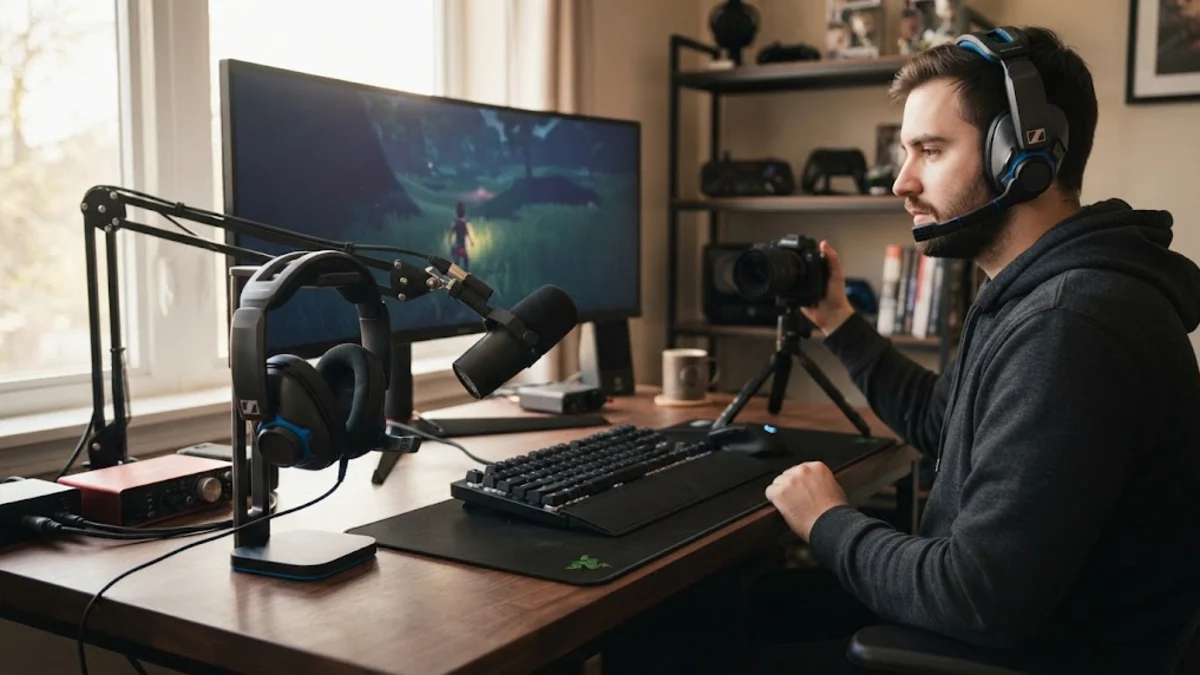
Overview
The Sennheiser GSP 300 has carved out a significant niche in the gaming market, particularly for users who are wary of the fragility often associated with consumer-grade peripherals. Unlike headsets designed primarily for aesthetic trends or extreme portability, the GSP 300 is engineered for those who sit at a desk for hours at a time. It represents a mature approach to audio, focusing on a neutral sound signature rather than the bass-heavy, bloated profiles that frequently obscure subtle audio cues in tactical competitive games. For many, the choice of a wired, analog headset is a deliberate one, avoiding the latency issues, battery degradation, and firmware complexities inherent in wireless devices. By keeping the design focused on basic connectivity—a standard 3.5mm jack—the GSP 300 bridges the gap between high-fidelity studio audio and the functional requirements of an intense gaming environment.
Design and Build
Construction quality is the defining characteristic of the GSP 300. In an industry where many manufacturers shave costs by utilizing thin, brittle plastics, this model stands out due to its rigid, durable chassis. The headband uses a split-fork design, a deliberate choice that distributes weight across the crown of the head rather than concentrating it on a single point. This is a game-changer for long-session comfort; users who frequently experience head fatigue or soreness from lighter, cheaper headsets will find the structural engineering here to be significantly more accommodating. The ear cups feature memory foam padding wrapped in a high-density, synthetic leather material. This combination provides excellent passive noise isolation. In a home environment, this seal helps eliminate distracting high-frequency noise from mechanical keyboards or household ambient sound. The cable is reinforced at the junction point, and the boom arm features a robust hinge mechanism that provides satisfying tactile feedback. It is built to survive the wear and tear of daily competitive gaming, being tucked into backpacks, or accidentally snagged, provided you handle it with standard care.
Key Features and Performance
Acoustically, the GSP 300 is surprisingly refined. While it is marketed as a gaming headset, its performance is rooted in Sennheiser's traditional studio heritage. The mid-tones are particularly impressive, which is critical for voice clarity in fast-paced communication. When you are engaged in complex team-based shooters where hearing voice commands is the difference between victory and defeat, the clarity provided by this headset is unmatched by many competitors in its price range. The high end is crisp but not sharp, meaning that sounds like footsteps, gun reloads, or distant ambient triggers in a game engine are presented with enough detail for you to locate them spatially. The noise-canceling microphone is the standout performer here. It features a broadcast-style pickup pattern that rejects ambient environmental noise effectively, ensuring that your teammates hear your voice, not the hum of your ceiling fan or the sound of your mouse clicks. The lift-to-mute function is arguably one of the most reliable features available on any headset; by moving the arm, you have an immediate, visual, and physical confirmation that your microphone is inactive, a critical safety feature for streamers and office workers alike.
Who It Is For (and Who Should Skip It)
This headset is an ideal companion for the dedicated PC gamer who values reliability above all else. If you are someone who keeps a dedicated workstation, the wired nature of the GSP 300 means you never have to worry about a battery dying mid-match or losing connection due to interference. It is also an excellent recommendation for parents purchasing gear for younger gamers who need a headset that can handle being dropped or handled roughly without needing an immediate replacement. Students who spend significant time on video calls and gaming will find the dual-use comfort profile highly beneficial. However, you should avoid this product if you have a workflow or gaming style that requires moving away from your desk frequently. Without wireless, you are strictly limited by the reach of the cable. Additionally, if you are a user who prefers to control audio settings via fancy software suites that offer surround sound simulation or specific EQ manipulation for different game genres, you might find the GSP 300's analog simplicity frustrating. It is a 'what you hear is what you get' device, designed to work perfectly right out of the box without the intervention of extra software.
Alternatives Worth Considering
To provide context, compare this against the HyperX Cloud II, which remains a massive market favorite. The Cloud II offers an aluminum frame that feels slightly more premium in the hand and includes a USB sound card, which provides virtual 7.1 surround sound that some gamers prefer for immersion. If your budget is tighter or if you value weight above everything else, the Logitech G435 is a viable alternative; it is extremely lightweight and offers wireless connectivity, though it loses the robust, noise-isolating leatherette ear cups found on the GSP 300. For those looking for an aesthetic shift, the SteelSeries Arctis Nova 3 offers a sleeker, more modern profile with customizable RGB lighting and software integration, which is a major draw for gamers who want their peripheral lighting to sync with their PC components. Each of these alternatives represents a specific trade-off—whether it is build quality, software features, or connectivity—whereas the GSP 300 remains the benchmark for pure, reliable, balanced performance.
Final Verdict
In the final analysis, the Sennheiser GSP 300 is a masterclass in focused design. It resists the urge to be everything to everyone and instead excels at being a reliable, high-performance tool for gaming communication. The audio signature is balanced, the microphone is industry-leading for its price class, and the physical build is designed to last for years rather than months. While it does not include features like detachable cables, digital surround sound, or Bluetooth capability, these omissions are exactly why the headset functions so consistently. You are paying for a quality microphone transducer and well-calibrated audio drivers, rather than proprietary software or complicated battery management systems. For any gamer looking to simplify their setup while upgrading the quality of their communication, the GSP 300 is a sensible, high-value investment that is likely to outlive more expensive, feature-bloated competitors.