Overview
As the demand for reliable off-grid power and home emergency backup continues to rise in 2026, the 2-kilowatt-hour (kWh) category has become the competitive battleground for portable power station manufacturers. The EcoFlow DELTA 2 Max sits at the center of this landscape, offering a significant upgrade over the standard DELTA 2 while avoiding the massive bulk and expense of the DELTA Pro series. Based on research of its technical specifications and performance data, this model is designed for users who need a powerhouse that can run 99% of household appliances without being permanently anchored to a single room. It replaces the original DELTA Max, bringing with it the much-requested Lithium Iron Phosphate (LFP) battery chemistry, which dramatically extends the unit's lifespan. In an era where power bank reviews often focus on small handheld chargers, the DELTA 2 Max is a reminder of what modern engineering can do for whole-home resilience and recreational vehicle (RV) life.
Design and Build
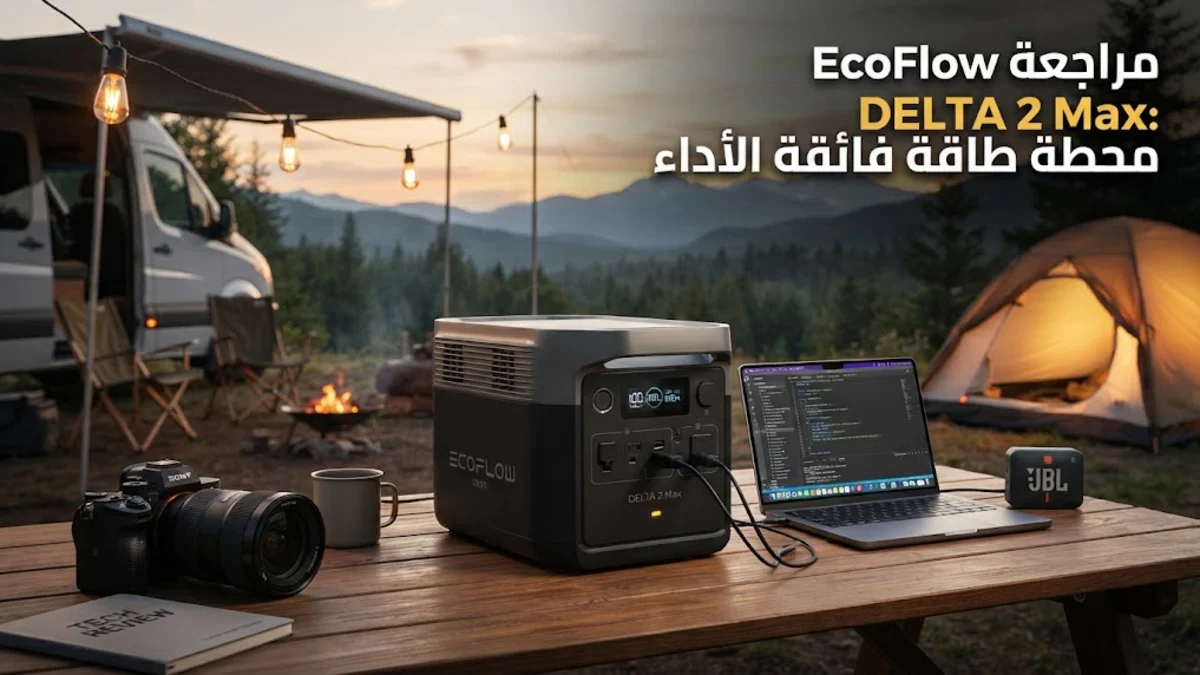
The design philosophy of the EcoFlow DELTA 2 Max follows the established aesthetic of the DELTA line: a sleek, dark gray and black chassis with integrated carry handles on either end. While it is marketed as portable, you should be aware that it weighs approximately 50.7 pounds (23 kg). This makes it manageable for a healthy adult to move from a garage to a car, but it is not something you would want to carry across a large campsite without a wagon. The handles are robust and molded into the frame, providing confidence when lifting. One of the most praised aspects of the build is the port layout. On the front, you find the large, easy-to-read LCD screen and the most frequently used DC ports, including four USB-A ports and two 100W USB-C Power Delivery ports. The back of the unit houses the heavy-duty AC outlets and the charging input ports. This separation helps with cable management, keeping the chunky power bricks and extension cords tucked away while leaving the front accessible for charging phones and laptops. However, unlike some competitors, the DELTA 2 Max does not include an integrated LED light bar, which is a missed opportunity for a device often used during power outages. The ventilation system is comprehensive, with fans located on both sides to manage the heat generated during high-speed charging or high-wattage discharge. Research indicates these fans are significantly quieter than previous generations, though they still produce a noticeable hum when the unit is pushed to its 2400W limit.
Key Features and Performance
Performance is where the DELTA 2 Max truly distinguishes itself from the pack. At its core is a 2048Wh LFP battery. The shift to LFP chemistry is critical; it allows the unit to undergo 3,000 full charge cycles before reaching 80% of its original capacity. In practical terms, if you used this power station every single day, it would last for nearly a decade. The AC output is rated at 2400W, with a surge capacity of 4800W. This is high enough to run a full-sized refrigerator, a microwave, or even a space heater. Furthermore, EcoFlow’s X-Boost technology allows the unit to power certain devices up to 3400W by lowering the voltage, which is particularly useful for resistive loads like hair dryers or circular saws. Another standout feature is the charging speed. Using a standard wall outlet, the DELTA 2 Max can charge from 0% to 80% in about 43 minutes, and a full charge takes roughly 1.1 hours. This is industry-leading and essential for those who only have a short window of time to recharge via a generator or a public outlet. For solar enthusiasts, the unit supports dual solar input with two separate MPPT controllers, allowing for a total of 1000W of solar panels. If you have optimal sunlight, you can recharge this 2kWh battery in about 2.3 hours using solar alone. The unit also features an Emergency Power Supply (EPS) mode. While not a true Uninterruptible Power Supply (UPS) with zero-millisecond latency, its 30ms switchover time is fast enough to keep desktop computers and refrigerators running during a sudden blackout without a reboot.
Who It Is For (and Who Should Skip It)
The EcoFlow DELTA 2 Max is an ideal choice for several specific types of users. If you are an RV owner or a van-lifer, the 2400W output and the ability to expand the capacity to 6kWh using extra batteries make it a perfect hub for your electrical system. It is also a premier choice for homeowners who want a "gasless generator" for emergency backup. It can keep a modern fridge running for 14 to 20 hours on its own, and much longer if supplemented by solar. However, it may not be the right fit for everyone. If your primary goal is lightweight camping or keeping a phone charged on a flight, this unit is far too heavy and bulky. For those needs, a dedicated power bank for travel or a smaller unit like the EcoFlow RIVER series would be more appropriate. Additionally, if you require a power station that you can roll around like a suitcase, you might find the lack of integrated wheels on the DELTA 2 Max frustrating, especially compared to the Anker SOLIX F2000 or the larger DELTA Pro models. Finally, users who are not tech-savvy may find the heavy reliance on the smartphone app for adjusting settings—like fan speeds or charging limits—to be a bit of a hurdle, as the on-device interface is relatively basic.
Alternatives Worth Considering
When comparing the DELTA 2 Max to its rivals, the Jackery Explorer 2000 Plus is the most direct competitor. The Jackery offers a higher 3000W AC output and is also built with LFP cells, but it is noticeably heavier and its AC charging speed is slower than the EcoFlow. If mobility is your priority, the Anker SOLIX F2000 (also known as the 767) is a strong alternative because it includes a built-in suitcase-style handle and wheels, making it much easier to move around despite its higher weight. However, the Anker has a slightly more restricted solar input configuration compared to the dual-input flexibility of the DELTA 2 Max. For those on a tighter budget who still want the 2kWh capacity, the Bluetti AC200MAX is a veteran in the space. While the Bluetti is often available at a lower price point, it lacks the extremely fast AC charging speeds and the sophisticated app ecosystem that EcoFlow provides. Each of these competitors has its strengths, but the EcoFlow DELTA 2 Max remains the most well-rounded in terms of charging efficiency and power-to-weight ratio in the 2000Wh class.
Final Verdict
The EcoFlow DELTA 2 Max is a masterclass in balancing specifications. It takes the best parts of the original DELTA series—fast charging and high output—and adds the longevity of LFP battery chemistry. While the weight is a factor to consider and the lack of a built-in light is a minor annoyance, the overall performance package is difficult to beat. Whether you are prepping for a hurricane, powering a remote worksite, or heading out for a week-long camping trip in an RV, the DELTA 2 Max provides the reliability and speed that modern users demand. It is a significant investment, but given its 10-year lifespan and expandable nature, it offers excellent long-term value for anyone serious about portable power.