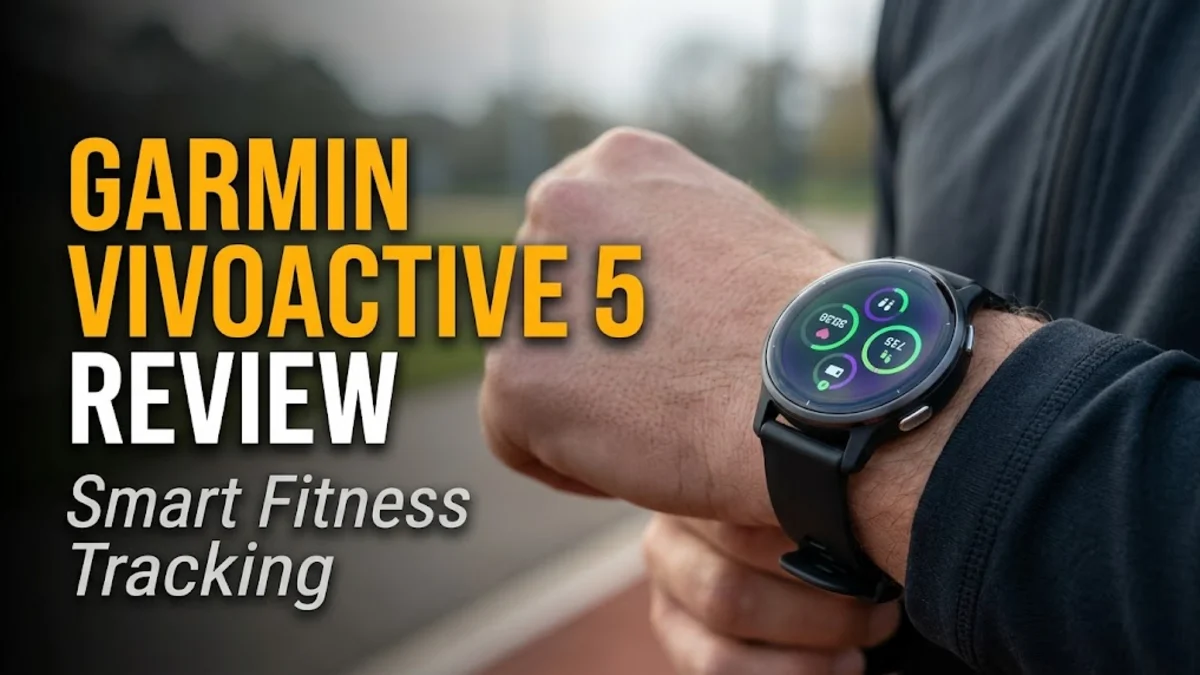
Overview
The Garmin Vivoactive 5 fills an essential niche in the modern wearable landscape, striking a balanced middle ground between hyper-dedicated running watches and full-fledged lifestyle smartwatches like the Apple Watch Series 10 or Samsung Galaxy Watch 7. Positioning itself as an accessible health and fitness companion, this model brings Garmin's praised biometric tracking and multi-day battery stamina to a broader audience at a price point significantly lower than the flagship Venu series.
Unlike its predecessor, which featured a memory-in-pixel display, the Vivoactive 5 upgrades to a vibrant AMOLED touchscreen that brings menus, custom watch faces, and detailed health graphs to life. While it inherits many higher-end software features from Garmin's premium lineup—including personalized Sleep Coaching, HRV status, Body Battery energy monitoring, and specialized workout profiles like wheelchair tracking—it leaves behind a few hardware features to keep costs down. Based on extensive analysis of industry testing, detailed spec sheets, and hundreds of verified owner reports, this review covers everything you need to know about how the Garmin Vivoactive 5 performs in real-world everyday use.
Design and Build
Garmin designed the Vivoactive 5 with light, sleek comfort in mind. Measuring 42.2 mm across and just 11.1 mm thick, it sits neatly on a wide variety of wrist sizes without feeling bulky or top-heavy during high-intensity training or sleep tracking. Weighing just 36 grams with the included silicone band, it is light enough that you will likely forget you are wearing it within minutes of putting it on.
The watch body combines a lightweight fiber-reinforced polymer chassis with a neat anodized aluminum bezel surrounding the display. While it does not feature stainless steel or titanium elements like higher-tier multi-sport devices, the composite construction is durable and comfortably resistant to daily scuffs. The front face is protected by Corning Gorilla Glass 3, which provides adequate resistance against minor impacts and scratches, though adding a screen protector remains a popular option if you are a trail runner or outdoor enthusiast.
One of the most noticeable hardware upgrades is the 1.2-inch AMOLED touchscreen. Boasting a crisp 390 by 390 pixel resolution, text is sharp, colors are rich, and health charts are easily legible indoors and under direct sunlight. You can toggle between a gesture-activated display mode to conserve power or an optional always-on mode for immediate readability at a glance. Operation relies on a combination of swiping the touchscreen and using two physical buttons on the right side. The top button opens your sports tracking menu and selects options, while the bottom button functions as a back key and menu shortcut. This dual interface works well for casual daily interactions, though if you attempt to swipe through screens with wet or sweaty hands during fast-paced workouts you may miss having full physical button navigation found on Garmin's Forerunner lineup.
With a 5 ATM water-resistance rating, the watch is fully suitable for pool swimming, showering, and rain, though it is not designed for high-speed watersports or deep diving. The watch utilizes standard 20 mm quick-release silicone straps, allowing you to easily swap out the factory band for leather, nylon, or stainless steel alternatives to match different settings.
Key Features and Performance
At the core of the Vivoactive 5 experience is Garmin's robust health and activity monitoring ecosystem. Equipped with the Elevate Gen 4 optical heart rate sensor, the watch continuously records your heart rate, resting heart rate, stress levels, respiration, and Pulse Ox blood oxygen saturation. While serious athletes seeking micro-second precision in quick interval sessions may still want a chest strap, testing confirms that the optical sensor delivers reliable, accurate heart rate tracking across steady-state runs, indoor cycling, walking, and recovery analysis.
One of Garmin's standout daily tools is Body Battery energy monitoring. By analyzing heart rate variability, stress levels, sleep quality, and daily physical exertion, Body Battery assigns a numeric score from 1 to 100 representing your personal energy reserves. The Vivoactive 5 refines this calculation by adding explicit Sleep Coach recommendations and automatic nap detection. If you take a quick afternoon power nap, the device detects the period of rest, records its duration, and adjusts your Body Battery score accordingly. Sleep analysis breaks down light, deep, and REM sleep stages while providing an overall sleep score alongside personalized advice on how much rest you need for optimal recovery.
For fitness tracking, the device includes over 30 preloaded sports apps covering popular activities like indoor and outdoor running, cycling, pool swimming, strength training, HIIT, yoga, pilates, and golf. It also introduces a dedicated wheelchair mode that tracks pushes rather than steps and provides adapted activity profiles and weight-shift alerts. Satellite location tracking utilizes multi-GNSS support (GPS, GLONASS, and Galileo) for accurate distance and pace mapping outdoors. However, cost-cutting measures mean the Vivoactive 5 lacks multi-band (dual-frequency) GPS and a barometric altimeter. The absence of an altimeter means the watch cannot count stair flights climbed during your daily routines, and elevation changes during outdoor runs or hikes are calculated via GPS mapping data post-workout rather than measured directly via air pressure.
Smart functionality covers all essential baseline expectations without overwhelming you. The watch supports smart notifications for incoming calls, text messages, calendar alerts, and app notifications when connected to your iOS or Android smartphone. Android users enjoy the added convenience of sending quick text replies directly from the wrist and viewing incoming photos on the screen. Contactless payments are handled via Garmin Pay, allowing you to make purchases at supporting terminals without taking out your wallet. Music storage is another strong suite: you can download up to 650 songs or offline playlists from Spotify, Amazon Music, or Deezer directly to the device and stream audio directly to your paired Bluetooth headphones without needing your smartphone nearby.
Battery performance remains a major strength over competitors like the Apple Watch or Samsung Galaxy Watch. Garmin claims up to 11 days of battery life in smartwatch mode (or up to 5 days with always-on display activated) and up to 21 hours of continuous GPS tracking. In real-world testing and owner reports, light-to-moderate users routinely achieve 7 to 9 days on a single charge with daily wellness tracking and several GPS workouts, eliminating the annoying habit of nightly charging.
Who It Is For (and Who Should Skip It)
The Garmin Vivoactive 5 is ideal for health-conscious individuals, fitness enthusiasts, and everyday users who want robust, comprehensive health tracking without paying premium prices for specialized multi-sport watches. It is particularly well-suited if you prioritize long battery life, detailed sleep and energy coaching, and offline music playback over cellular connectivity or voice assistance.
However, power users and dedicated performance athletes should consider other options. If you frequently climb stairs and want floor-counting metrics, or if you demand a barometric altimeter for precise elevation profiles while trail running, this watch will feel incomplete. Similarly, if you are a runner who prefers navigating menus purely via physical buttons rather than a touchscreen, you will find Garmin's Forerunner 165 or 265 better tailored to your needs. Finally, if you want full smartwatch capabilities such as taking phone calls directly on your wrist, using a voice assistant, or accessing a massive third-party app store, a dedicated smartwatch like the Apple Watch Series 10 or Samsung Galaxy Watch 7 remains a superior lifestyle choice.
Alternatives Worth Considering
When evaluating the Vivoactive 5 against alternative options, several competitors stand out depending on your specific priorities:
- Garmin Venu 3: Positioned above the Vivoactive 5, the Venu 3 adds a built-in microphone and speaker for taking voice calls and accessing phone voice assistants, a barometric altimeter for floor tracking, an updated Elevate Gen 5 optical sensor with ECG capabilities, and two physical size options (41 mm and 45 mm). However, it costs significantly more.
- Fitbit Sense 2: A direct rival in health-centric wearables, the Sense 2 offers excellent sleep logging, stress monitoring sensors, and seamless integration with Google services. However, it requires a monthly Fitbit Premium subscription to unlock detailed health trends, and its smartwatch and music playback features are far more limited.
- Apple Watch SE (2nd Gen): For iPhone users seeking seamless integration with iOS, Apple's budget watch provides rich app support, emergency crash detection, and smooth communication features. However, its battery life requires daily charging, and it lacks an always-on display and advanced energy recovery metrics like Body Battery.
Final Verdict
The Garmin Vivoactive 5 is one of the most well-rounded health and fitness smartwatches available in its price tier. By pairing a bright, colorful AMOLED screen with Garmin's top-tier recovery metrics like Sleep Coach and Body Battery, it offers incredible everyday utility for anyone looking to understand their physical well-being. While the exclusion of a barometric altimeter and microphone represents a clear hardware compromise, the week-long battery life, built-in GPS accuracy, and offline music storage make it an easy recommendation for fitness-minded shoppers.