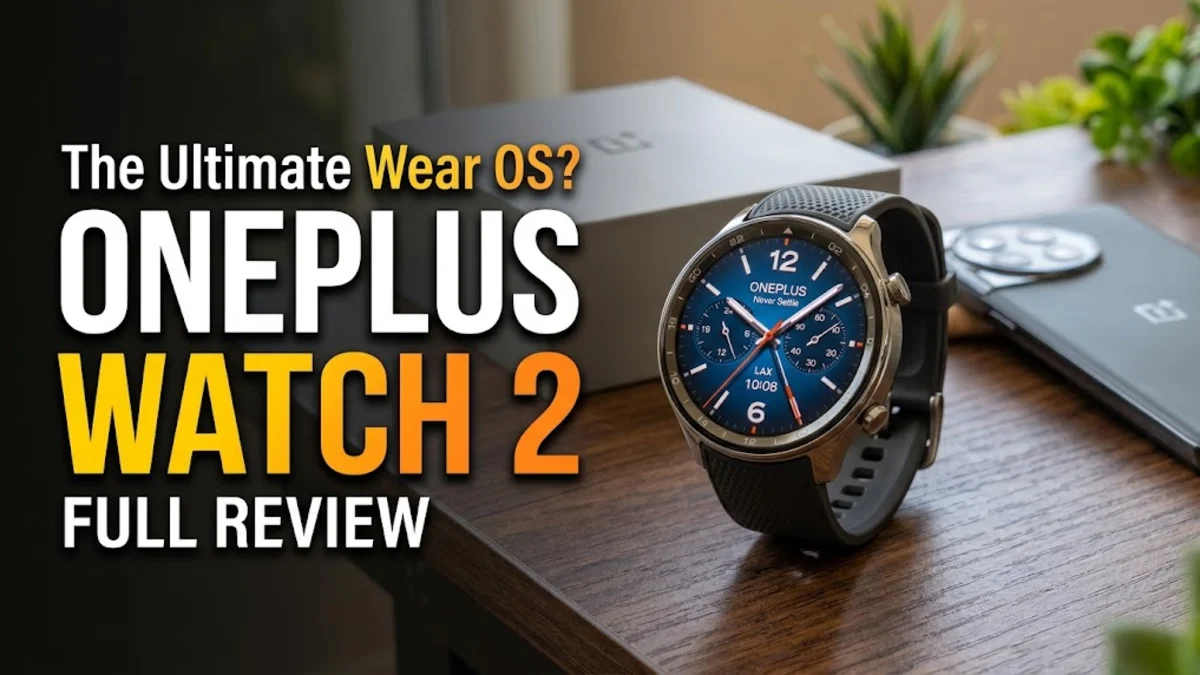
Overview
Finding a smartwatch that balances functionality with longevity has long been the primary challenge for Android users. While the market is flooded with options, most fall into one of two categories: feature-rich watches that require nightly charging, or basic fitness trackers that last weeks but lack advanced app ecosystems. The OnePlus Watch 2 represents a major milestone in this niche, attempting to bridge the gap with a sophisticated Dual-Engine Architecture. Research into its design reveals that it uses two different processors and two distinct operating systems simultaneously. This configuration allows it to stretch battery life far beyond the typical 24-to-48-hour window of its direct competitors. In a market where convenience is king, the promise of up to 100 hours of use per charge while maintaining access to the Google Play Store is a compelling proposition for those integrated into the Android ecosystem. This review examines the specifications, user feedback, and expert consensus regarding this device as it stands in late 2026.
Design and Build
The build quality of the OnePlus Watch 2 is frequently cited by experts as one of its strongest attributes. Eschewing the aluminum found on many entry-level smartwatches, this device features a cold-polished stainless steel chassis. This choice provides a weight and presence on the wrist that feels closer to a traditional timepiece than a plastic fitness gadget. Protecting the 1.43-inch AMOLED display is a 2.5D sapphire crystal cover, which is significantly more scratch-resistant than standard glass. This is a premium inclusion for a watch in this price tier, ensuring that the screen remains free from the micro-abrasions that can plague daily-wear electronics. The design includes a unique flat edge on the right side where the two physical buttons reside, intended to mimic the look of a classic chronograph. However, buyers should note that while the top button looks like a rotating crown, it only functions as a pressable button. This lack of a scrolling physical interface is a notable departure from some competitors like the Google Pixel Watch 3 or Samsung Galaxy Watch 7. The device is currently only available in a 46mm size, which may feel oversized on smaller wrists but allows for a generous 500mAh battery. The watch is also rated for MIL-STD-810H durability and 5ATM water resistance, making it suitable for swimming and harsh environmental conditions.
Key Features and Performance
The centerpiece of the OnePlus Watch 2 is its Dual-Engine Architecture. It pairs a high-performance Snapdragon W5 Gen 1 chipset to handle Wear OS 4 and intensive apps with a high-efficiency BES2700 co-processor that runs a low-power RTOS (Real-Time Operating System) for background tasks and basic functions. This system works seamlessly; when you are navigating a map or replying to a message, the Snapdragon chip takes over, but when the watch is simply tracking your steps or displaying the time, the BES2700 handles the load to conserve power. Expert reviews confirm that this hand-off is invisible to the user. For fitness enthusiasts, the inclusion of dual-frequency L1+L5 GPS is a significant highlight. Verified buyer feedback suggests that this system provides much faster satellite acquisition and more stable tracking in dense urban areas or under heavy tree cover compared to single-frequency models. The health tracking suite, managed through the OHealth app, covers all the essentials: heart rate monitoring, blood oxygen levels, and stress tracking. Research indicates that the sleep tracking is particularly detailed, providing a Sleep Snoring Risk assessment by combining respiratory data with sound analysis. The watch supports over 100 sports modes, with specialized metrics for runners, such as ground contact time and vertical oscillation. However, while the hardware is capable, some users have noted that the OHealth platform currently lacks the deep community features and advanced recovery insights found in the ecosystems of Garmin or Fitbit.
Who It Is For (and Who Should Skip It)
The OnePlus Watch 2 is primarily designed for Android users who prioritize battery life but do not want to sacrifice the smart features of Wear OS. It is an ideal choice for power users who frequently use Google Assistant, Google Maps, and third-party apps but are tired of the anxiety associated with daily charging. The 100-hour battery claim is generally supported by user reports in Smart Mode, making it one of the longest-lasting full-featured smartwatches available. It also appeals to those who appreciate a rugged, traditional watch aesthetic thanks to its stainless steel and sapphire construction. Conversely, there are several groups who should look elsewhere. iPhone users are completely excluded, as the watch is strictly compatible with Android devices. Those with small wrists may find the 46mm case too bulky or uncomfortable for sleep tracking. Additionally, if you require a standalone cellular connection for running or errands without your phone, the lack of an LTE variant is a significant drawback. Finally, individuals who require medical-grade features like ECG or blood pressure monitoring may find the OnePlus feature set lacking compared to the more medically-focused offerings from Samsung or Withings.
Alternatives Worth Considering
When comparing the OnePlus Watch 2 to its peers, several alternatives stand out. The Samsung Galaxy Watch 7 is the most direct competitor for general Android users. While its battery life is shorter (typically 24-30 hours), it offers a more mature health ecosystem, including FDA-cleared ECG and sleep apnea detection, and it comes in two sizes (40mm and 44mm). For those who want the purest Google experience, the Pixel Watch 3 provides better integration with Google Home and Fitbit, along with a more sleek, minimalist design, though it too suffers from shorter battery life. If fitness tracking is the absolute priority over smart features, the Garmin Venu 3 is a strong contender. It offers battery life that can last up to 14 days and provides much more sophisticated training recovery data, though its app store is limited compared to Wear OS. For budget-conscious buyers, the Fitbit Charge 6 offers excellent fitness and sleep tracking in a much smaller form factor for about half the price, albeit with a significantly smaller screen and fewer smart capabilities.
Final Verdict
The OnePlus Watch 2 is a formidable entry in the wearable market, specifically for its innovative approach to power management. By successfully implementing a dual-chip architecture, it addresses the single largest pain point of Wear OS devices without stripping away the features that make them smart. The combination of a premium stainless steel build, sapphire crystal, and highly accurate dual-frequency GPS makes it a high-value option for the price. While the lack of a smaller size variant and the absence of LTE are disappointments, they do not overshadow the achievement of creating a four-day smartwatch that doesn't compromise on performance. For the average Android user looking for a reliable, durable, and long-lasting companion, research suggests this is currently one of the most practical choices on the market. It represents a shift toward more efficient wearable computing that other manufacturers would be wise to emulate.