Overview
The home office landscape has evolved significantly by 2026, with professional-grade ergonomics becoming a standard requirement for anyone spending more than a few hours at their desk. In this environment, the Steelcase Series 2 stands as a compelling middle ground between entry-level task chairs and high-end industrial titans like the Leap or the Gesture. While many shoppers initially look for the cheapest possible mesh chair, they often find that long-term back health requires something more sophisticated. Our research into the Series 2 shows that it is designed to deliver approximately 90 percent of the ergonomic benefits of a flagship chair at roughly half the price. This chair is particularly relevant for users in Australia, the United States, and the United Kingdom who have access to Steelcase’s robust distribution network and 12-year warranty support. It addresses the common pain points of home office workers: back fatigue, limited adjustability in the arms, and the heat buildup associated with poorly ventilated chairs.
Design and Build
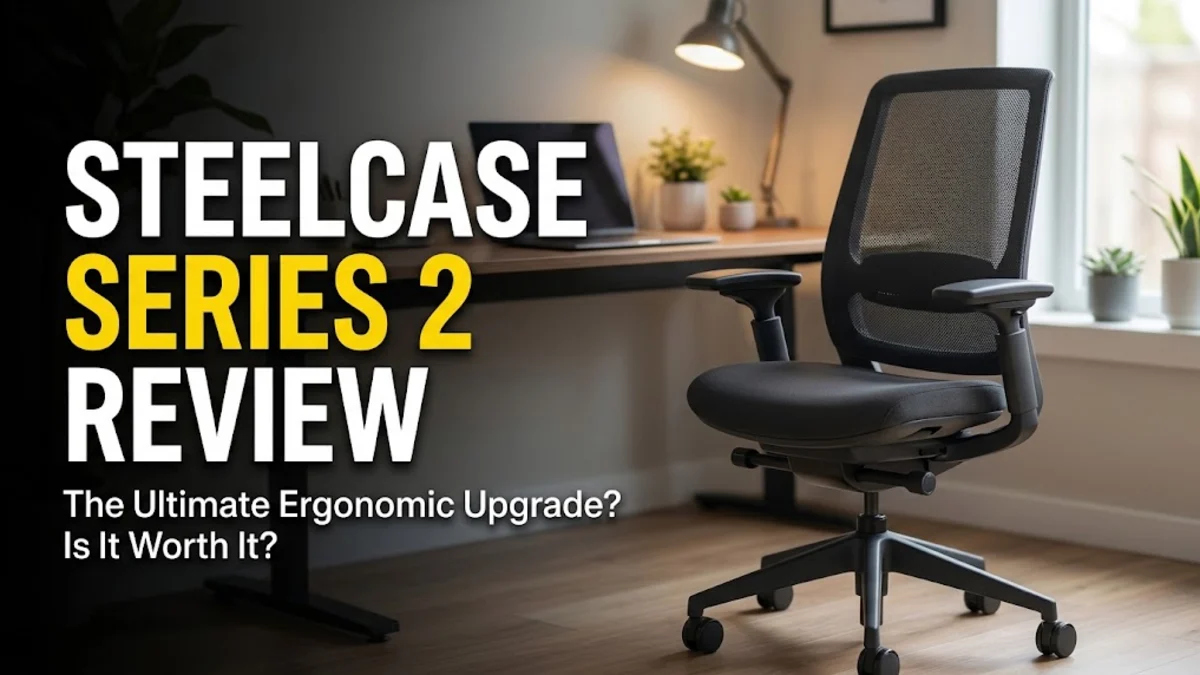
The first thing you notice about the Steelcase Series 2 is its slim, unobtrusive silhouette. Unlike the bulky, aggressive look of many gaming chairs, the Series 2 is designed to blend into a residential environment while still looking like a serious piece of office equipment. The centerpiece of the design is the AirBack. This is not a traditional fabric mesh; instead, it is a specially engineered polymer sheet with a geometric pattern of cutouts. These cutouts are not just for aesthetics; they are mapped to the human spine to provide different levels of tension and flex. When you lean back, the material responds to your shape, offering a dynamic support system that Steelcase calls LiveBack technology. This approach provides the breathability of mesh without the sagging that can occur with cheaper fabrics over time. The frame itself is constructed from high-strength plastic, which helps keep the weight of the chair manageable for home assembly and relocation. Despite the plastic construction, the tolerances are tight, and there is a distinct lack of the squeaking or rattling often found in budget-tier office furniture. The base is available in both reinforced plastic and polished aluminum, depending on your budget and aesthetic preference.
Key Features and Performance
The standout technical feature of the Series 2 is its weight-activated tilt mechanism. In traditional chairs, you spend minutes cranking a tension knob to find the right balance between being ejected from the chair and falling backward too easily. The Series 2 handles this automatically. By using a series of clever linkages, the chair uses your own body weight to determine the appropriate amount of resistance for the recline. This makes it an excellent choice for households where multiple people might share a single workspace. However, if you prefer a bit more control, there is a comfort dial that allows you to add a tension boost or lock the chair in an upright position. Another area where the Series 2 punches above its weight class is the armrests. The 4D arms are essentially the same units found on more expensive Steelcase models. They adjust for height, width, depth, and pivot. This level of customization is crucial for preventing repetitive strain injuries, as it allows you to bring the armrests close to your body to support your elbows while typing, or move them out of the way for more active tasks. The seat cushion is another point of discussion in expert reviews. Steelcase uses a high-density, proprietary foam that is significantly thinner than what you would see on a plush executive chair. While it may feel firm during the first thirty minutes of use, this firmness is intentional. It provides consistent support over a 10-hour workday, preventing the bottoming out that leads to tailbone pain. The seat also features an adjustable depth of nearly three inches, which is vital for ensuring that users of different heights can maintain proper circulation in their legs.
Who It Is For (and Who Should Skip It)
The Steelcase Series 2 is ideally suited for the professional who wants a set and forget ergonomic experience. If you are someone who finds themselves frequently switching between tasks—leaning forward to write, then reclining to take a video call—the weight-activated tilt will feel like a luxury. It is also an excellent choice for users with limited floor space, as its footprint is noticeably smaller than a Herman Miller Aeron or a Steelcase Gesture. Those who live in warmer climates will particularly appreciate the AirBack’s airflow. However, this chair might not be the best fit for everyone. If you are over 6 feet 4 inches or weigh more than 300 pounds, you might find the backrest to be slightly too narrow and the seat to be a bit small for absolute comfort. Furthermore, if you are looking for a chair that feels like a soft, padded recliner, the Series 2's focus on firm support and polymer components might feel too industrial or stiff for your liking.
Alternatives Worth Considering
When shopping in this price bracket, the most obvious competitor is the Herman Miller Sayl. The Sayl offers a more iconic, designer look with its suspension back, though some users find the Series 2’s AirBack to be more supportive for the upper spine. Another strong alternative is the Branch Ergonomic Chair, which has gained massive popularity for its lower price point. While the Branch offers excellent value, it lacks the sophisticated weight-activated mechanism and the long-term 12-year warranty of the Steelcase. If you have a larger budget, the Haworth Zody II is also worth a look, offering a more traditional mesh back with highly granular lumbar controls. Finally, if you are purely focused on maximum cushion, you might consider moving up to the Steelcase Leap, which remains a gold standard for seat comfort, albeit at a significantly higher price.
Final Verdict
After analyzing the technical specifications and the broad range of feedback from long-term users, the Steelcase Series 2 emerges as one of the most balanced office chairs on the market in 2026. It manages to deliver high-end ergonomic features—most notably the 4D arms and the weight-activated tilt—without the four-figure price tag associated with premium status symbols. While the plastic-heavy construction and the firm seat might be a deterrent for those seeking pure luxury, the Series 2 is built for the reality of the modern workday. It is a tool for productivity that prioritizes spinal health and durability. With a 12-year warranty backing it up, it represents a much better long-term investment than the budget chairs found at big-box retailers. If you want a chair that works as hard as you do and won't need replacing for a decade, the Series 2 is an easy recommendation.